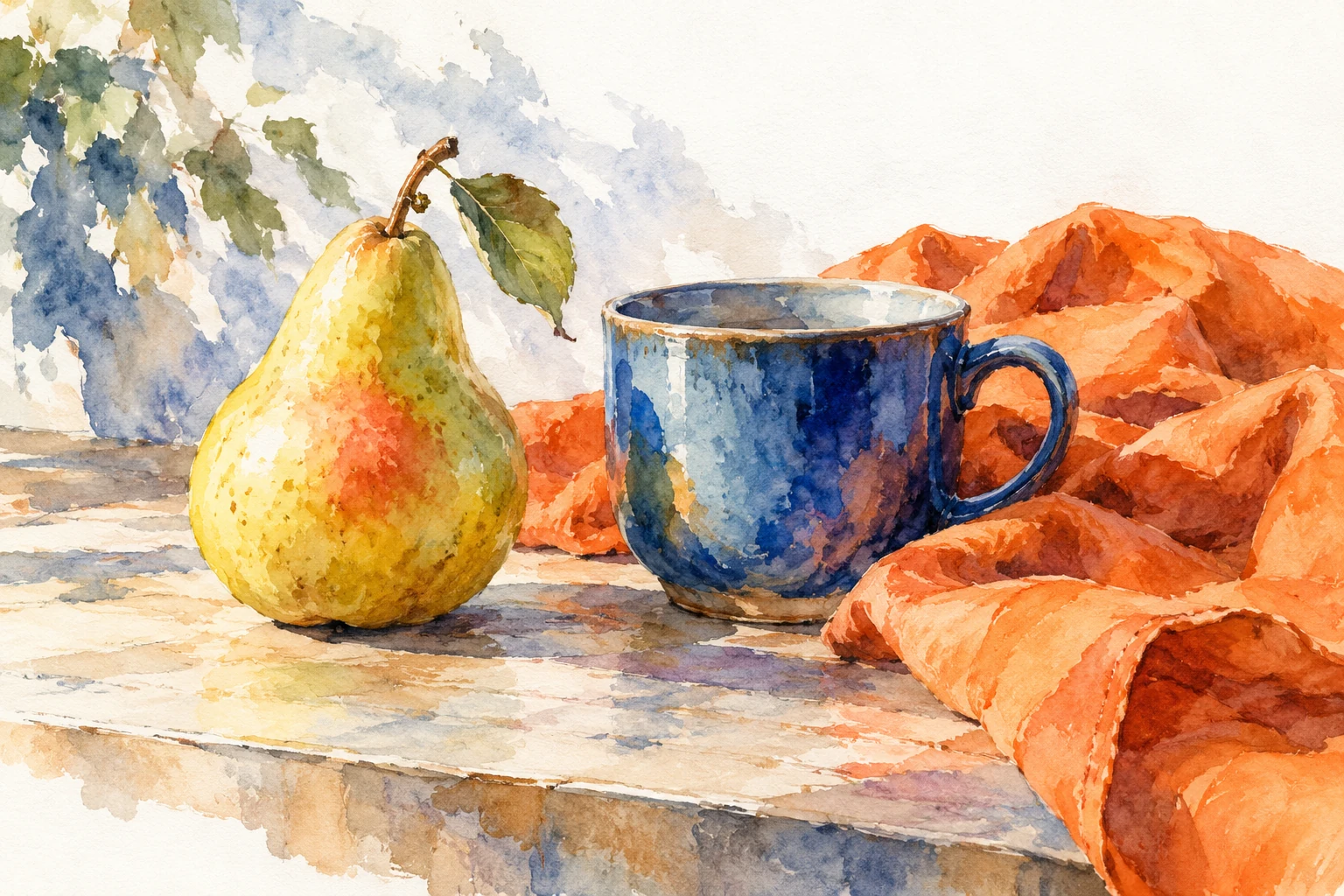
Warm and cool colors: create depth and emphasis
Understand color temperature as a relationship, compare warm and cool versions of a hue, and use those shifts deliberately in illustrations and layouts.
Follow a topic, look up a technique, or find an idea to try.
Understand color temperature as a relationship, compare warm and cool versions of a hue, and use those shifts deliberately in illustrations and layouts.
Build a clear flyer using a concise offer, a deliberate reading sequence, and practical distribution constraints, with an example for a community workshop.
Distinguish pair spacing from overall letter spacing, inspect display words optically, and avoid using global adjustments to repair isolated gaps.
Observe the large light and shadow groups, control pencil pressure and layers, and distinguish form shadows from cast shadows before blending fine transitions.
Choose a modal only for a bounded interruption, then plan its content, focus, dismissal, and recovery using a destructive project action as a worked example.
Scope a studio-loan product around one complete borrowing task, including availability, agreement, receipt, and support, while deferring features that do not resolve the central uncertainty.
Adapt an exhibition guide for narrow views and enlarged text by preserving content, order, control access, and relationships, then investigate overflow rather than hiding it.
Choose prototype detail by the uncertainty you need to investigate, comparing paper flows, clickable screens, and working interfaces without treating visual polish as proof of realistic behavior.
Make a branching drawing from a stopping rule, a scale reduction, and a repeated transformation, while keeping the construction small enough to inspect by hand.
Use coordinated changes in height and width to express softness, impact, and recovery, while keeping the shape's apparent mass under deliberate control.
Map a sound's changing amplitude to a restrained visual response, using a known audio source and a quiet-state check before attempting complex audiovisual behavior.
Build a simple rising paper platform, checking its folds and clearances in a plain prototype before using it as the support for a small sculptural scene.
Build lighter, darker, and quieter versions of a base color, then choose a short range that stays distinguishable in real illustrations and design components.
Map a folded brochure’s reading sequence, place content according to the physical structure, and avoid common panel, margin, and production mistakes.
Set line spacing in relation to the actual font, width, and size, then troubleshoot cramped or fragmented paragraphs without relying on a single universal ratio.
Control line direction, spacing, layering, and edge quality to describe value and form, while keeping a drawn texture from overwhelming the subject.
Compare accordions and tabs for a workshop guide, using visibility, comparison, headings, deep links, and keyboard behavior as practical decision criteria.
Compare studio-booking improvements using task importance, uncertainty, dependency, effort, and recovery impact, then record the assumptions behind the order instead of trusting an unexplained score.
Audit a workshop card's interactive areas, spacing, labels, and hit regions, then improve activation without confusing visual icon size with the actual target or ignoring defined exceptions.
Plan a workshop-booking study through research questions, participants, realistic tasks, consent, logistics, observation, and analysis while keeping claims proportionate to the work actually performed.
Create a modest particle emitter with clear birth and death rules, then use lifetime and velocity to shape a spray, a mist, or a falling curtain.
Prepare an action with a small preceding movement, choosing the direction and duration of that preparation so the main event feels motivated and easy to follow.
Use a potentiometer as a continuous artistic control, calibrating its observed range before mapping it to a small drawing system or physical visual response.
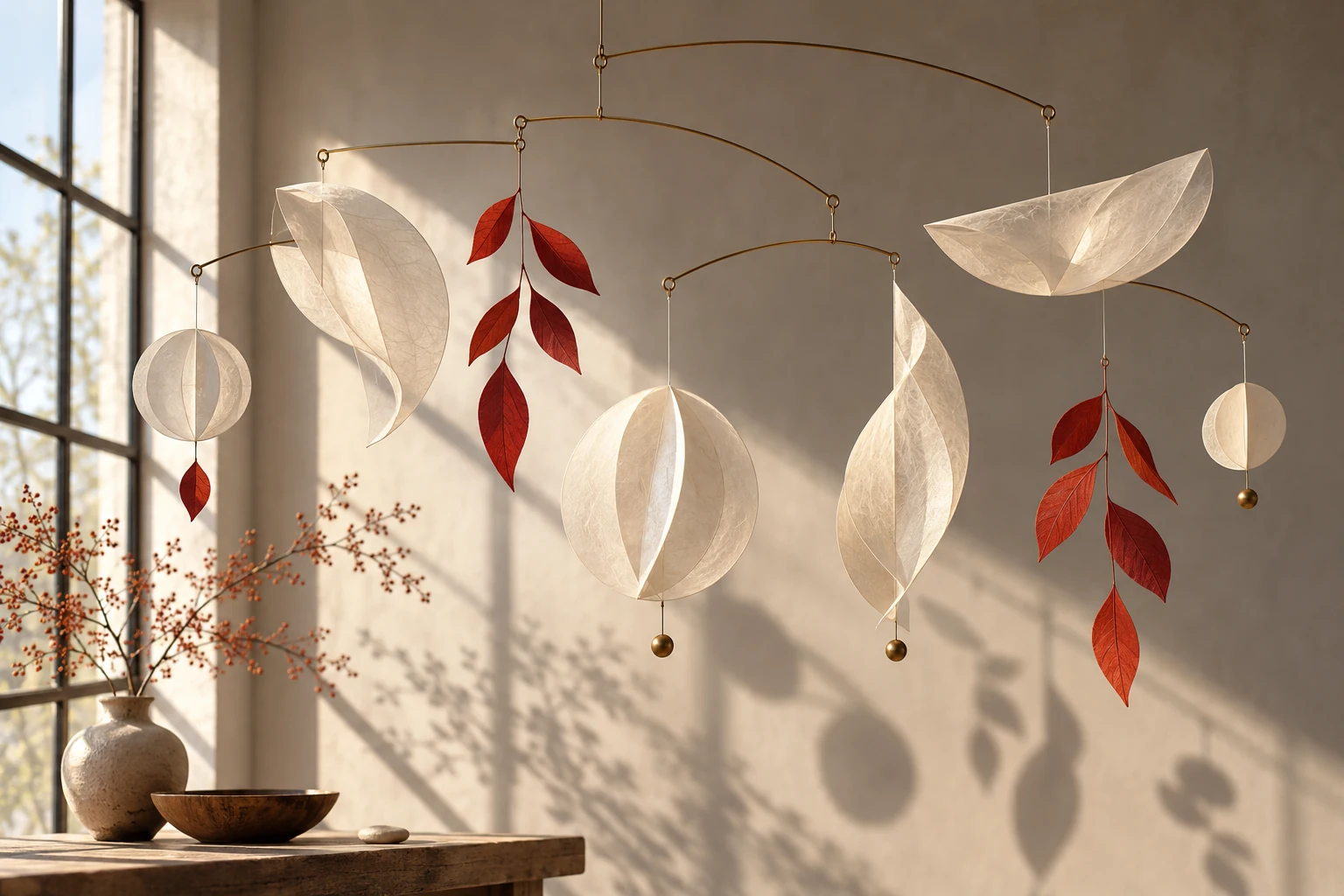
Construct a lightweight hanging sculpture by balancing small assemblies, testing suspension points and movement clearance before building a larger system of connected parts.