Plan an MVP that completes one useful task
Scope a studio-loan product around one complete borrowing task, including availability, agreement, receipt, and support, while deferring features that do not resolve the central uncertainty.
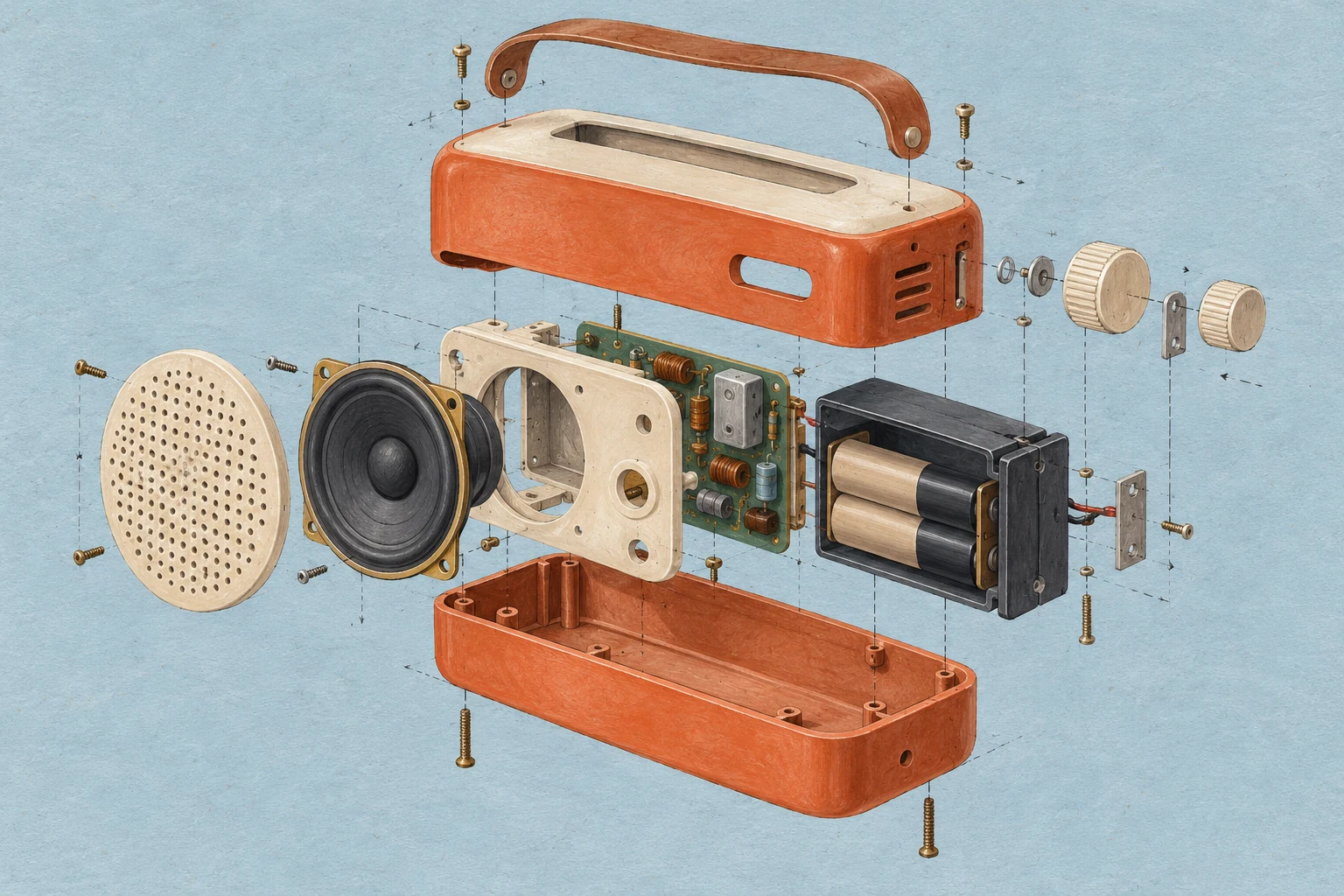
Complete one useful task
An MVP should make a limited product proposition usable enough to learn from, rather than offering a large feature list with essential steps missing. For a studio-loan service, finding a tool without being able to reserve or collect it may not complete a useful task. Define the smallest coherent outcome first.
Reduce breadth without breaking the service
Separate task completeness from feature breadth. One collection location, a limited catalog, and a clear manual confirmation process may form a coherent early service. Social profiles and recommendations can wait if they do not address the main uncertainty. Make any manual operational work explicit so the product does not promise automatic behavior it cannot provide. Treat every additional requirement as a question with an owner. Determine whether the requirement comes from a real task, an operational constraint, or a team preference. Keep the first two visible in the design and challenge the third when it creates work. Writing these distinctions next to the proposal prevents a tidy layout from concealing an unresolved service decision or an unexplained restriction.
Scope a five-tool borrowing service
Scope a loan service for five bookbinding tools. Draw the complete path from checking availability through requesting a loan to receiving collection instructions. Identify what staff must do and what the borrower sees while waiting. Write a support route for a tool that becomes unavailable before collection. Use ordinary content rather than a perfect demonstration record. Include one short entry, one unusually long entry, and one entry with missing optional information. Work through the task in the order a newcomer would encounter it. Write down what they can reasonably know at each point. Whenever the sketch requires an explanation from its creator, add the missing cue to the artifact before increasing its visual fidelity.
Protect recovery and operational promises
Cutting error recovery or confirmation to reduce scope can leave the central task unusable. Adding several catalog categories before understanding one complete loan journey can widen uncertainty instead of reducing it. If a manual process cannot meet the promised response, reduce the promise or redesign the operation rather than hiding the gap. Avoid solving the failure by asking people to be more careful. Look for an earlier decision the design can clarify, a value it can preserve, or a consequence it can make reversible. If there is an unavoidable limitation, explain it before the affected action and provide a useful next step. The fallback deserves the same attention as the ordinary route through the experience.
Connect scope to the learning question
Review every proposed feature against the learning question and the complete task. State what the MVP can help investigate and what it deliberately leaves unanswered. Plan how real observations will be recorded without inventing success criteria after the fact. A narrower service with honest boundaries is easier to assess than a broad collection of disconnected demonstrations.
Worked decision
Five tools with a complete request-and-collection route provide a coherent scope. Fifty listings without confirmation leave the core loan task unfinished.
References & further reading
Examples and exercises in this guide are original teaching scenarios.