Types of product design: digital, physical, and service
Compare digital products, physical objects, and services through a shared studio-membership example, focusing on constraints, deliverables, dependencies, and what a prototype can reasonably answer.

One membership spans several product types
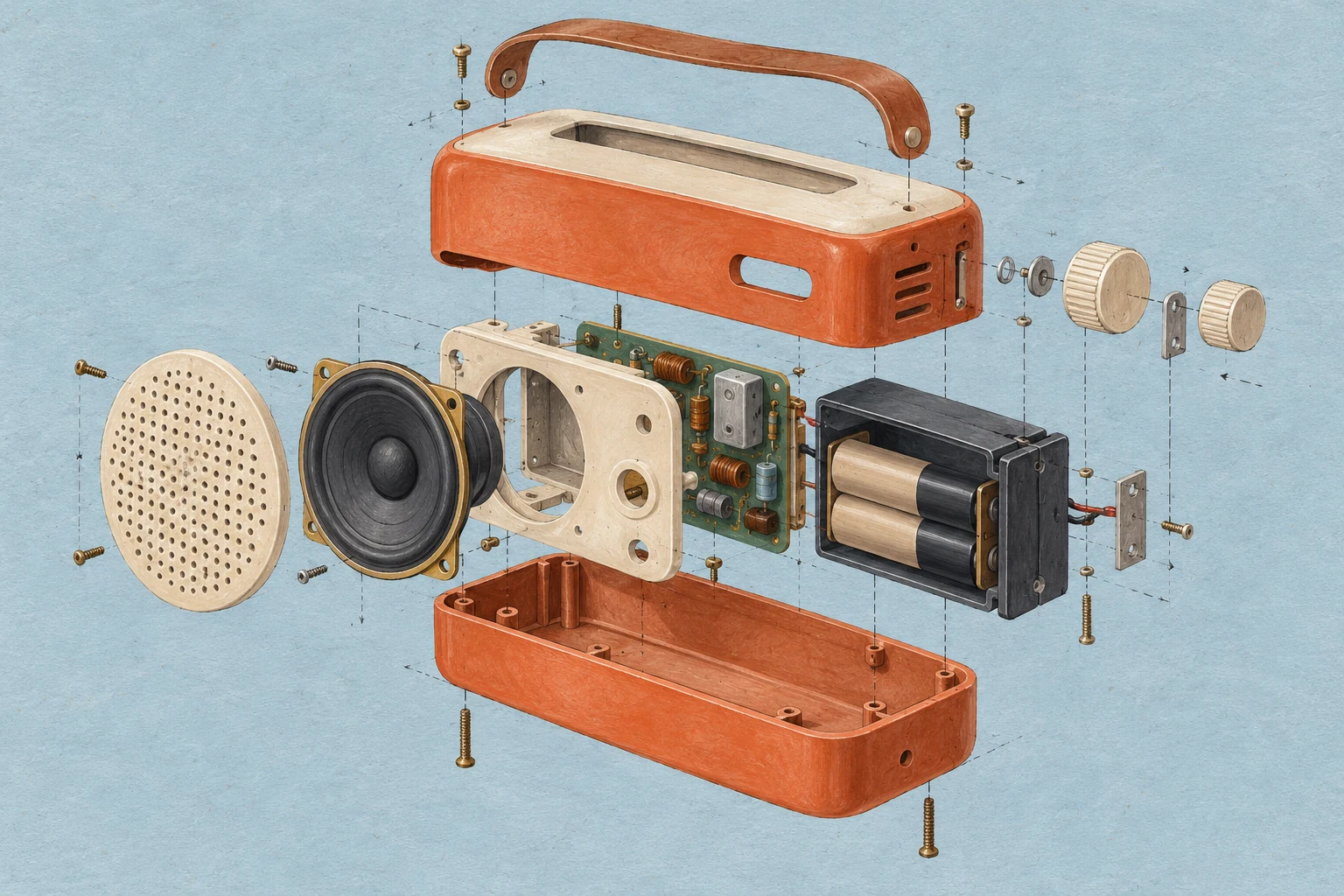
Product design can concern an object, a digital tool, a service, or a combination of them. The useful distinction lies in the constraints and the experience being designed. A studio membership might include a physical access card, a booking application, and an induction service. Designing only one layer leaves dependencies between the others.
Identify each layer's constraints
For each layer, identify the person, intended outcome, operating conditions, and failure consequences. A card must survive handling and fit a reader; a booking tool must represent availability; an induction must prepare someone to use shared equipment. Their deliverables differ, but all require decisions about how people encounter and use them. Write the rule as a short contract between the person and the product: an action has a visible consequence, that consequence has a recognizable state, and the next action remains possible. Sketch the ordinary path and one interruption beside it. This exposes missing information earlier than polishing a single screen. Keep the labels in the proposal close to the eventual product language so that unclear words cannot hide behind annotation.
Prototype card, booking, and induction
Map a membership from purchase to the first studio session. Sketch the card, the booking confirmation, and the induction checklist. Mark the information each depends on, such as membership status or equipment authorization. Choose a different prototype for each uncertainty: a physical mockup, a screen sequence, or a rehearsed service. Make a paper walkthrough with one card for each important state. Add a second set of cards for an interruption, a changed answer, and a return visit. Someone else should be able to operate the cards using only the visible instructions. Where they need hidden knowledge, note the missing information instead of teaching the intended path. Revise the cards before spending time on detailed visual treatment.
Assign responsibility across layers
A beautiful card cannot compensate for inaccurate membership status, and a polished booking flow cannot authorize unsafe equipment use. When an issue crosses layers, assign ownership rather than treating it as somebody else's problem. A disconnected prototype may look successful because it silently assumes that every surrounding service already works. Read every instruction while pretending the preceding explanation was missed. People arrive from links, resume after breaks, and move through content in different ways. Put the necessary context where the action happens. If the same problem recurs in several places, revise the underlying pattern instead of adding a separate warning to each instance. Shared causes usually deserve a coherent design response.
Review the combined service
Review the combined experience by tracing one member and one unusual situation, such as a lost card before a booked session. State what each prototype can demonstrate and what needs further investigation. This creates a practical understanding of product-design types without ranking them by prestige or pretending that one method answers every design question.
Worked decision
A lost access card affects the physical object, account status, and staff entry process. Prototype the handoff rather than fixing only the card artwork.
References & further reading
Examples and exercises in this guide are original teaching scenarios.