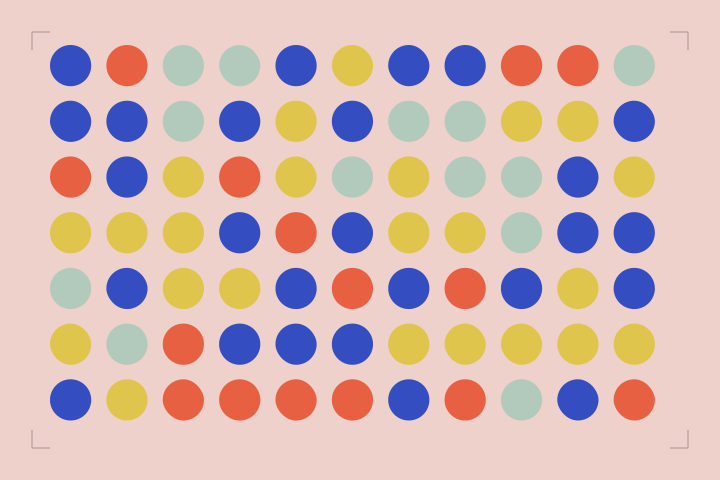
Build a small SVG illustration in a logical coordinate system, then choose how that drawing should meet square, wide, and cropped frames. Learn what viewBox and preserveAspectRatio actually control.
Compare independent variation with neighboring variation in a controlled line study, and choose a generator according to the kind of visual relationship your artwork needs.
Build a small generative sketch by separating a visible rule from its adjustable values, then turn a simple circle study into a repeatable visual experiment.
Translate an image you own into a field of marks by sampling brightness, keeping image coordinates, output spacing, and mark behavior under separate control.
Use temporary visual evidence to locate errors in generative artwork, separating drawing state, geometry, and changing values before adding more complexity.
Create a texture from a modest vocabulary of marks, using density and orientation as separate controls and preserving enough structure for the material to read clearly.
Use a repeatable random sequence to explore controlled variation, with a practical method for saving useful outcomes and avoiding a folder of untraceable lucky images.
Turn a promising sketch into a coherent small series by recording parameters, defining meaningful limits, and editing related images through deliberate comparison.
Use horizontal and vertical oscillations to create looping line art, then control closure, sampling, and phase without relying on random trial and error.
Make a branching drawing from a stopping rule, a scale reduction, and a repeated transformation, while keeping the construction small enough to inspect by hand.
Build a tiled geometric system by defining one cell, checking its edges, and introducing variation that respects the connections between neighboring tiles.
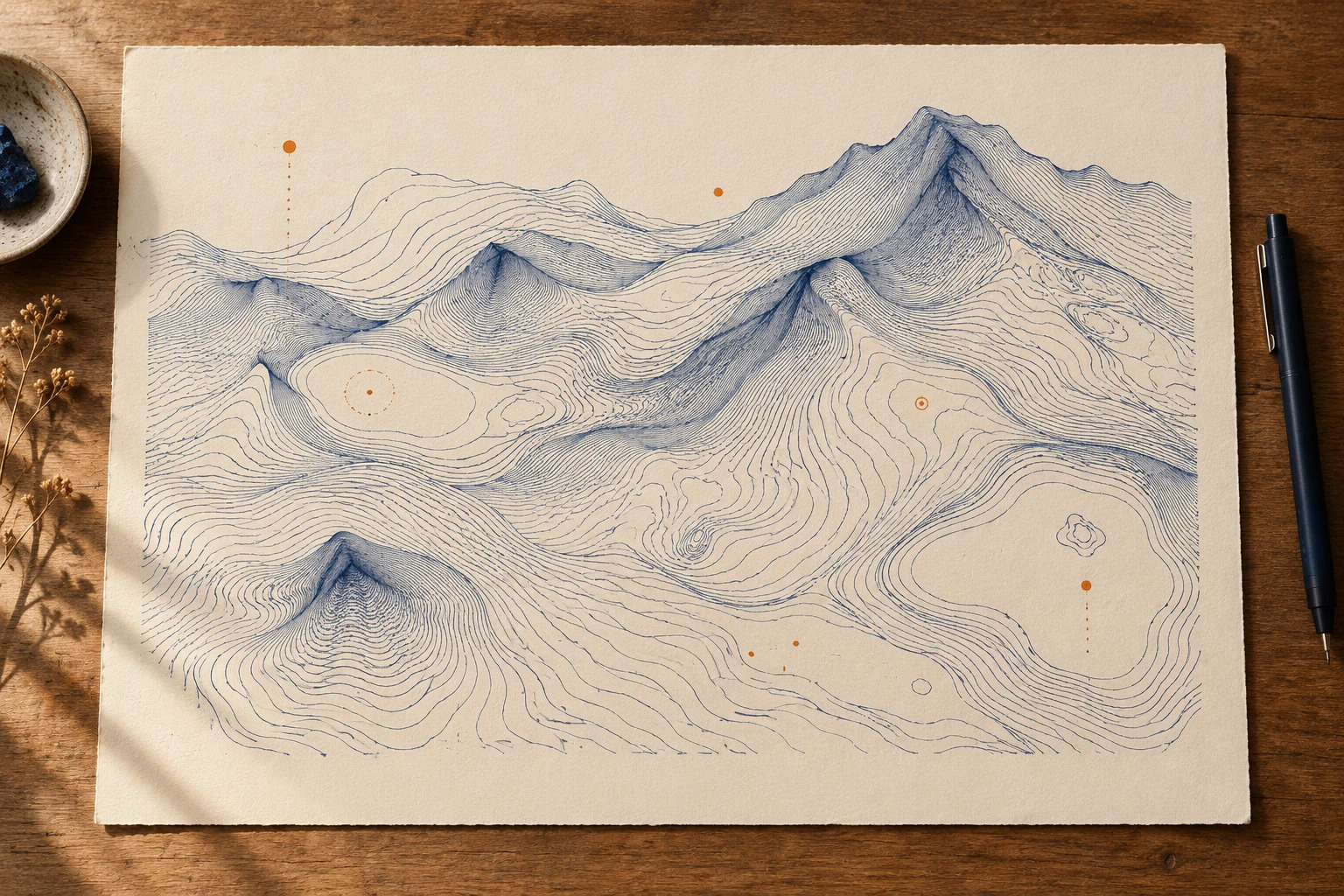
Build an invented landscape from a few related contour systems, using overlap and bounded variation to create depth without rendering a detailed scene.
Construct a small vector field for wandering lines, then diagnose tangles by separating field scale, movement distance, and the number of drawing agents.
Design a small rule-based grid using explicit neighbor counts, then compare behaviors from the same starting pattern without confusing update order with emergent structure.
Plan line-based generative work around pen movement, path continuity, and material trials, with a small proof that reveals problems before a long drawing begins.