Pamphlet stitch zine design: plan a small sewn book
Plan a compact zine as both a sequence of pages and a sewn paper object. A three-hole pamphlet stitch keeps the construction simple while the layout considers the fold, gutter, and reading order.
Think with your hands, materials, and prototypes.
19 practical guides
Plan a compact zine as both a sequence of pages and a sewn paper object. A three-hole pamphlet stitch keeps the construction simple while the layout considers the fold, gutter, and reading order.
Plan a small wearable artwork around a sewable low-voltage light module, keeping conductive paths separated and the electrical assembly removable for inspection and care.
Build a small sculptural form from interlocking card profiles, adjusting slot fit and grain direction before applying surface detail or extending the structure.
Design a simple articulated silhouette for projection, testing the cutout at its working distance and placing joints where they improve the character's most important gesture.
Build a small layered scene around a cool ready-made light source, using spacing and material tests to control silhouettes, translucency, and the visibility of construction.
Make an expressive fabric object from a small pattern, using seam placement, stuffing distribution, and a restrained silhouette to establish its character before adding details.
Combine clean everyday objects into a small sculptural arrangement, choosing a shared formal relationship and reversible connections before committing to a final assembly.
Design a sliding paper reveal with a clear grip, enough clearance, and a stopping point, turning a single motion into a small sequential scene.
Choose paper through small behavior tests rather than appearance alone, comparing folding, bending, translucency, and joining with the same simple samples.
Compare simple connections for small art objects, selecting a joint according to whether the parts need to rotate, stay rigid, or come apart for revision.
Explore how a cam's shape changes a repeated movement, using interchangeable cardboard profiles and a lightweight follower to compare smooth lifts, pauses, and abrupt changes.
Connect rigid card strips with simple pivots to make a controlled gesture, then adjust joint spacing and movement limits before attaching a lightweight sculptural form.
Make a folded book that changes through opening, choosing a sequence and support method that let the object work as both a handheld narrative and a standing form.
Build a small spatial model that tests how an artwork occupies a room, using consistent scale and simple human figures to inspect approach, sightlines, and spacing.
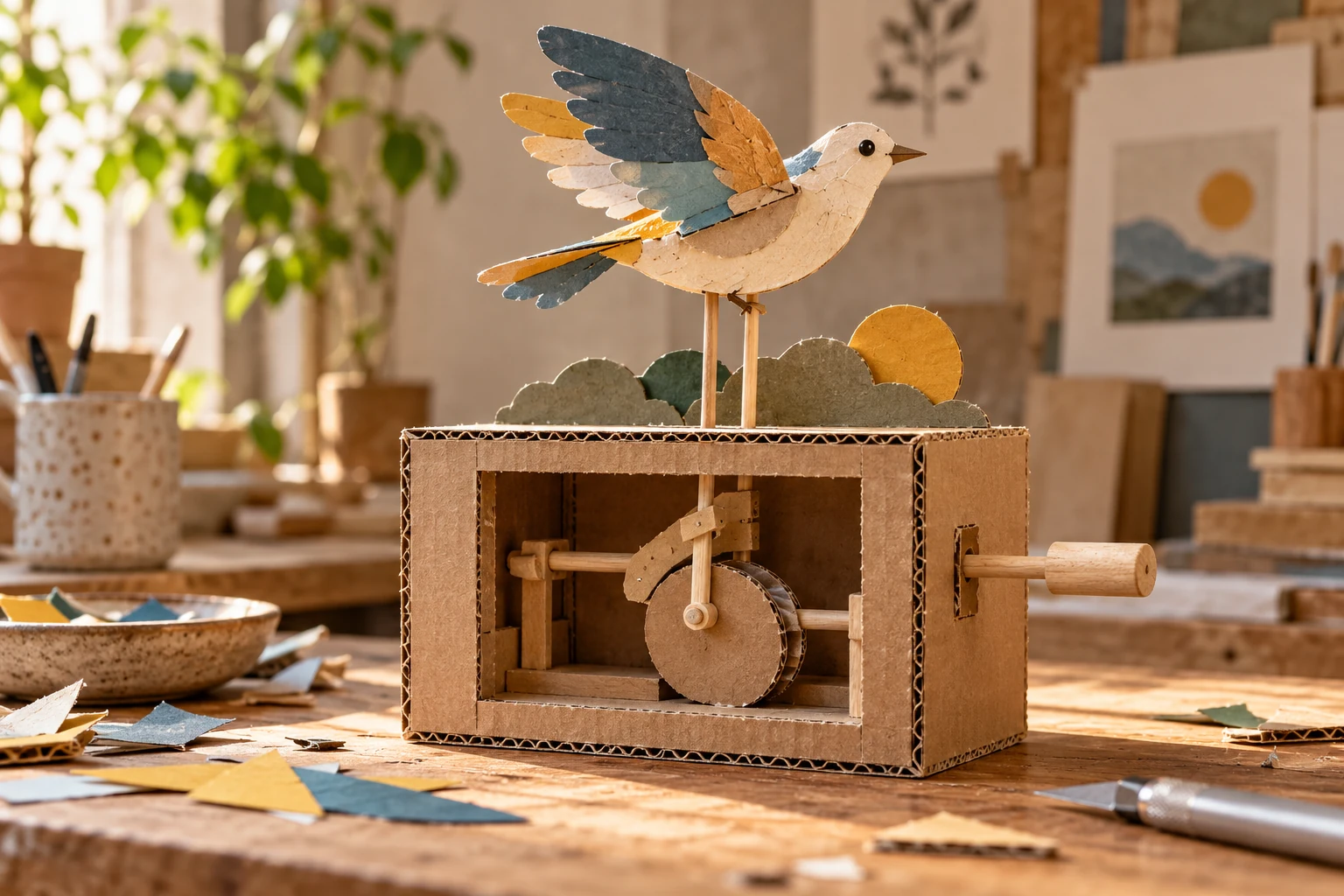
Build a hand-cranked cardboard scene by matching one simple movement to a small narrative, then keep the mechanism exposed until its motion works reliably.
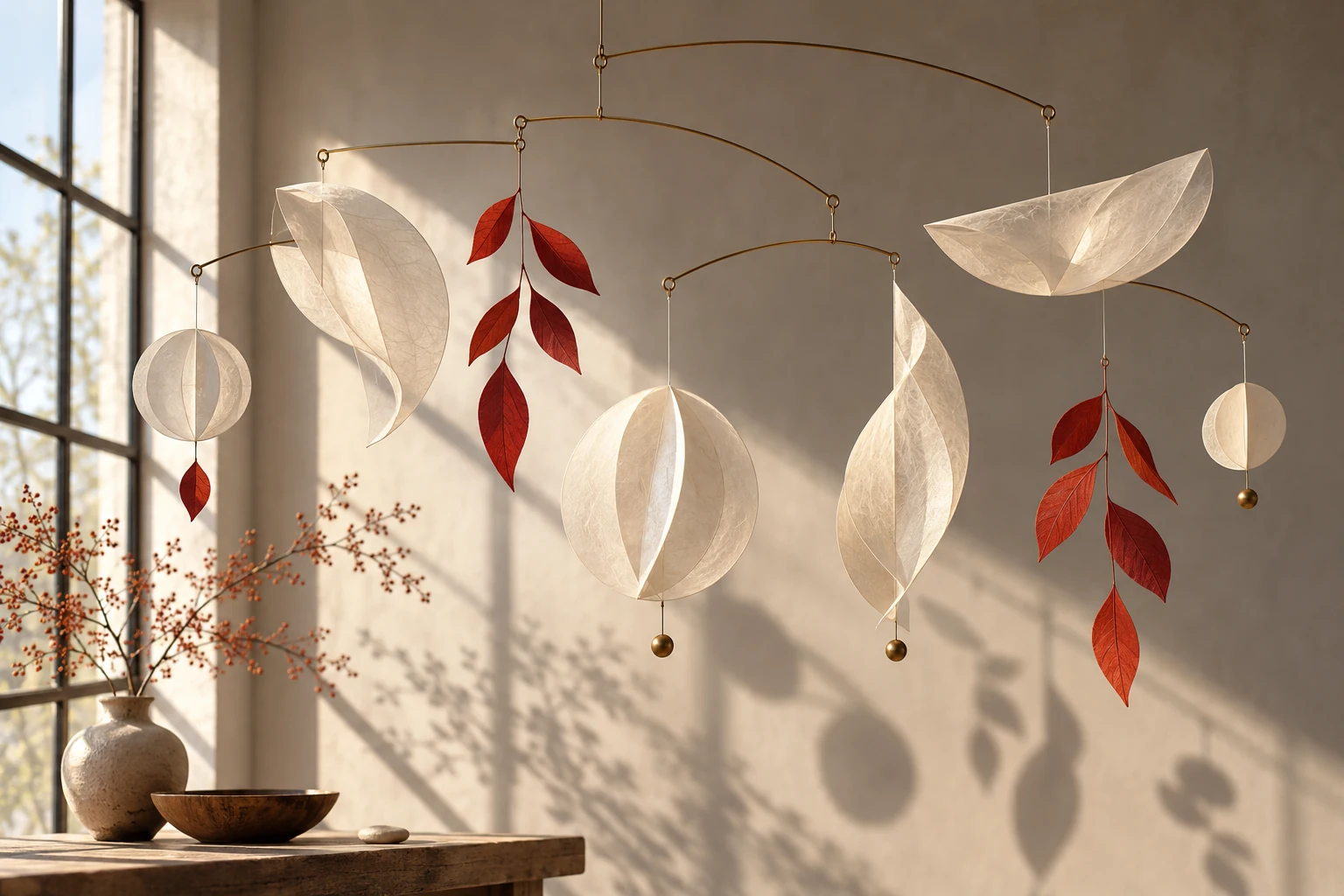
Construct a lightweight hanging sculpture by balancing small assemblies, testing suspension points and movement clearance before building a larger system of connected parts.
Create a moving sculpture from repeated paper elements, using a slow hand gesture to explore how a simple mechanism produces a larger wave or unfolding form.
Build a simple rising paper platform, checking its folds and clearances in a plain prototype before using it as the support for a small sculptural scene.
Develop a small folded module and combine it into a larger sculpture, checking fit and assembly order before expanding the system or introducing decorative variation.