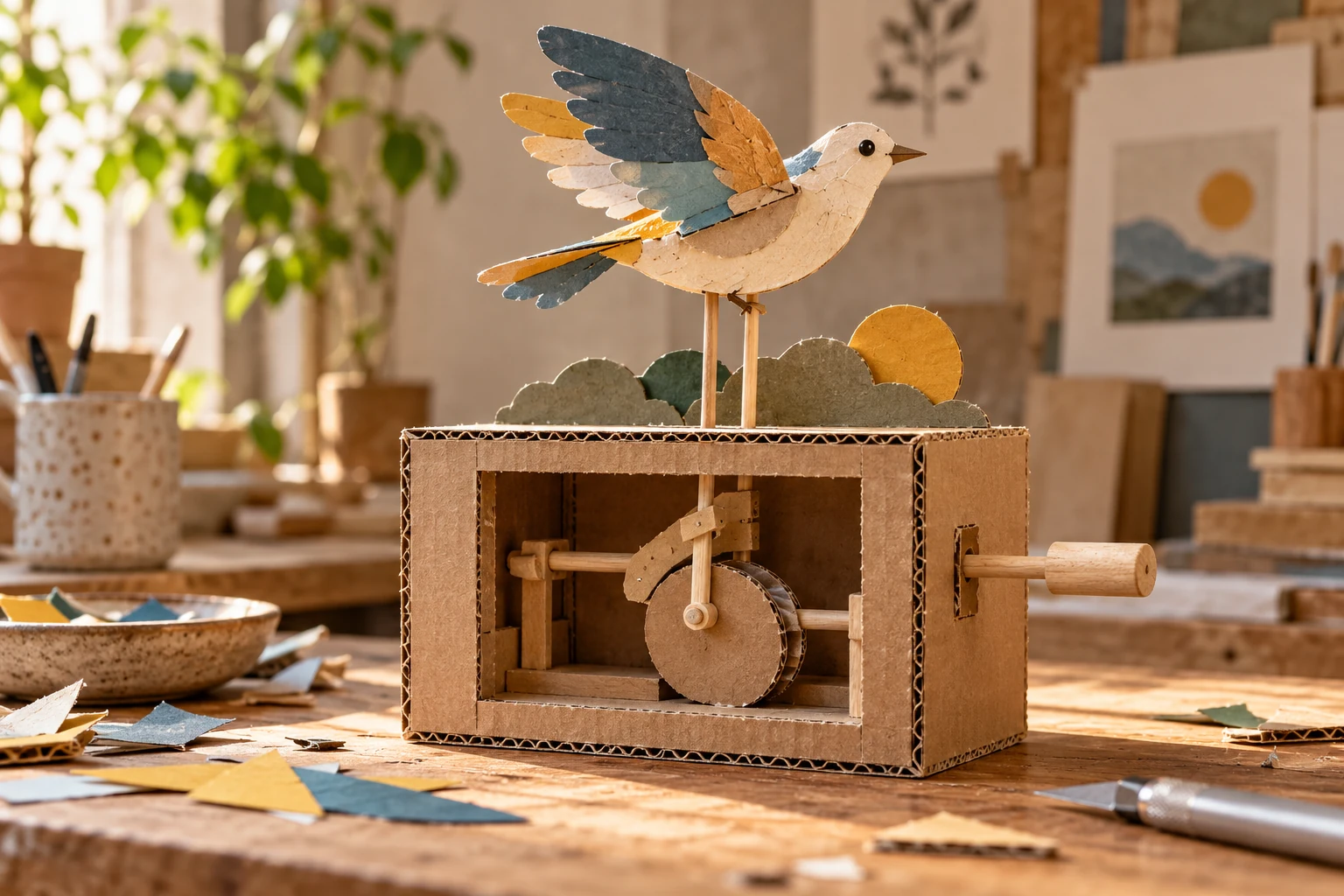
Paper cam mechanisms: shape the rhythm of a crank
Explore how a cam's shape changes a repeated movement, using interchangeable cardboard profiles and a lightweight follower to compare smooth lifts, pauses, and abrupt changes.

A rotating profile writes a movement phrase
A cam converts a rotating profile into a changing contact height. For a paper sculpture, its artistic value lies in the rhythm it creates. A rounded rise feels different from a sudden bump. Begin with a slowly hand-turned mechanism so you can see the relationship directly.
Turn a card profile beneath a guided follower
Cut a simple cam profile from layered card and mount it on an axle. Let a guided lightweight follower rest against the edge. Turn the axle by hand and mark the follower's highest and lowest positions. Keep the contact arrangement visible while testing a second profile.
Keep a visible note of high-region width on the cam while assembling the first version. Keep the ordinary state beside the most extreme intended state. The useful boundary is where the relationship remains understandable, rather than where the tool stops allowing a larger value. Check both ends before filling the middle. A useful acceptance check is whether the follower moves continuously and the intended pause is visible. Judge that at the intended viewing size or working distance, where tiny construction mistakes and exaggerated effects can have very different consequences.
Find abrupt falls and rough contact edges
If the follower loses contact, slow the crank and inspect whether the profile falls away too abruptly. If it catches, smooth rough edges and check alignment. A complex silhouette is not useful unless the follower can travel across it reliably.
Check one local instance of high-region width on the cam before assuming that the whole composition needs a different approach. Inspect the undecorated structure with the moving or removable parts exposed. Try the intended action gently and watch where force or friction concentrates.
Compare equal lifts with different rhythms
Make two interchangeable profiles that reach the same maximum height but take different routes there. Compare a gradual rounded rise with a shorter pronounced bump. Watch how much of the turn the moving object spends near its high point.
Test a compact set of alternatives: a narrow bump, a rounded crest, and a broad plateau. Give each trial the same amount of finishing work so polish does not bias the comparison. Review them once as complete pieces and once while concentrating on the changing feature. If your preference reverses, note which artistic goal each version serves more effectively.
Keep the comparison cams interchangeable
Give the trial cams the same mounting-hole position and outer working envelope. Otherwise a different axle height or overall size can obscure the effect of the profile itself. Label the cams and mark the start angle with a small notch or pencil line. Turn them at a comparable slow pace while watching the bird. If a broad high region still produces no pause, inspect whether the follower is contacting the intended part of the profile.
A bird that peeks and pauses
Build a paper bird that peeks above a ledge, pauses briefly, and sinks again. Shape the cam to provide a broader high region rather than trying to control the pause through hand speed alone. The profile becomes part of the scene's performance.
References & further reading
Examples and exercises in this guide are original teaching scenarios.