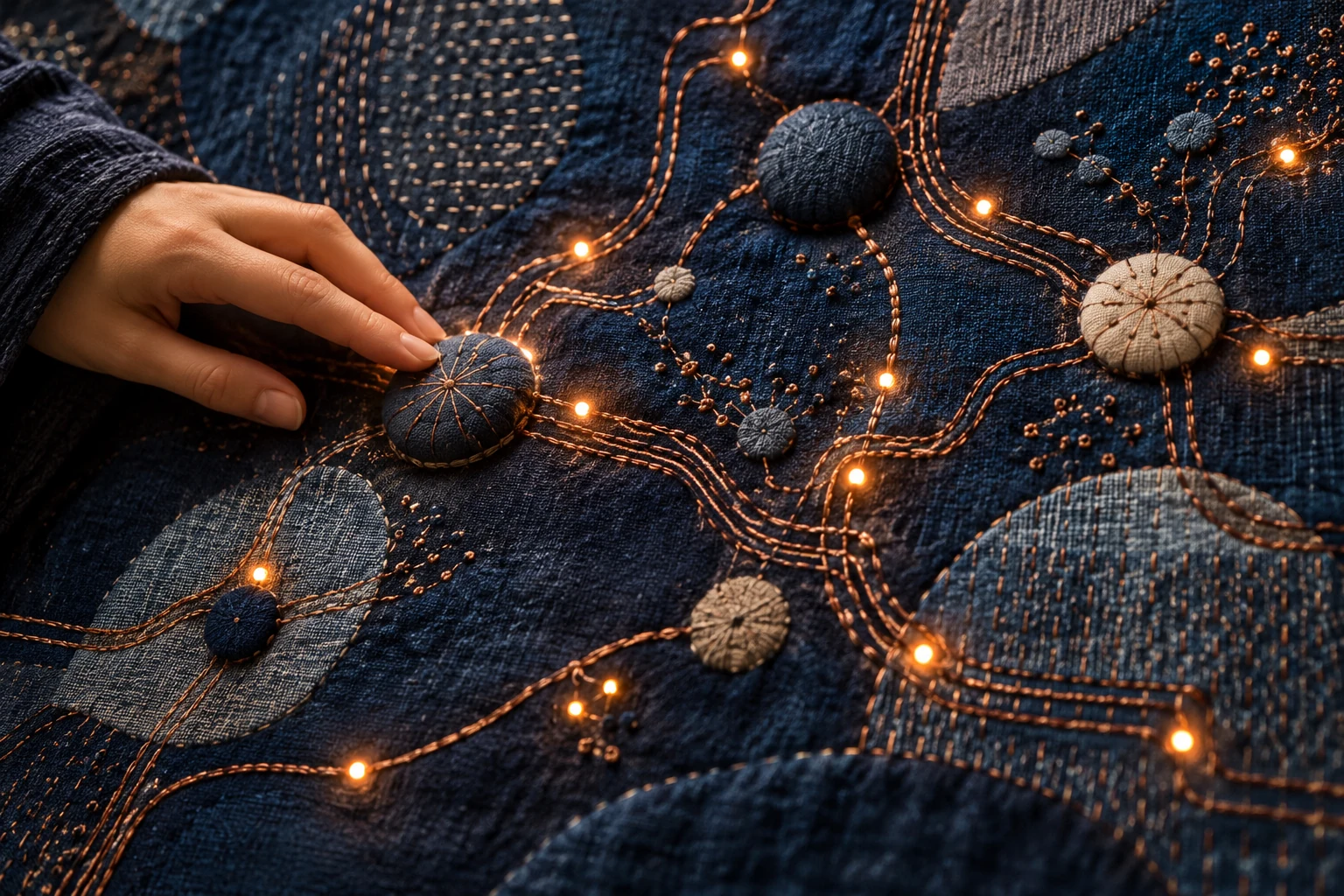
What is interactive art? Start with a meaningful response
Understand interactive art through the relationship between a participant's action and an artwork's response, then prototype a small piece whose behavior changes how it is experienced.
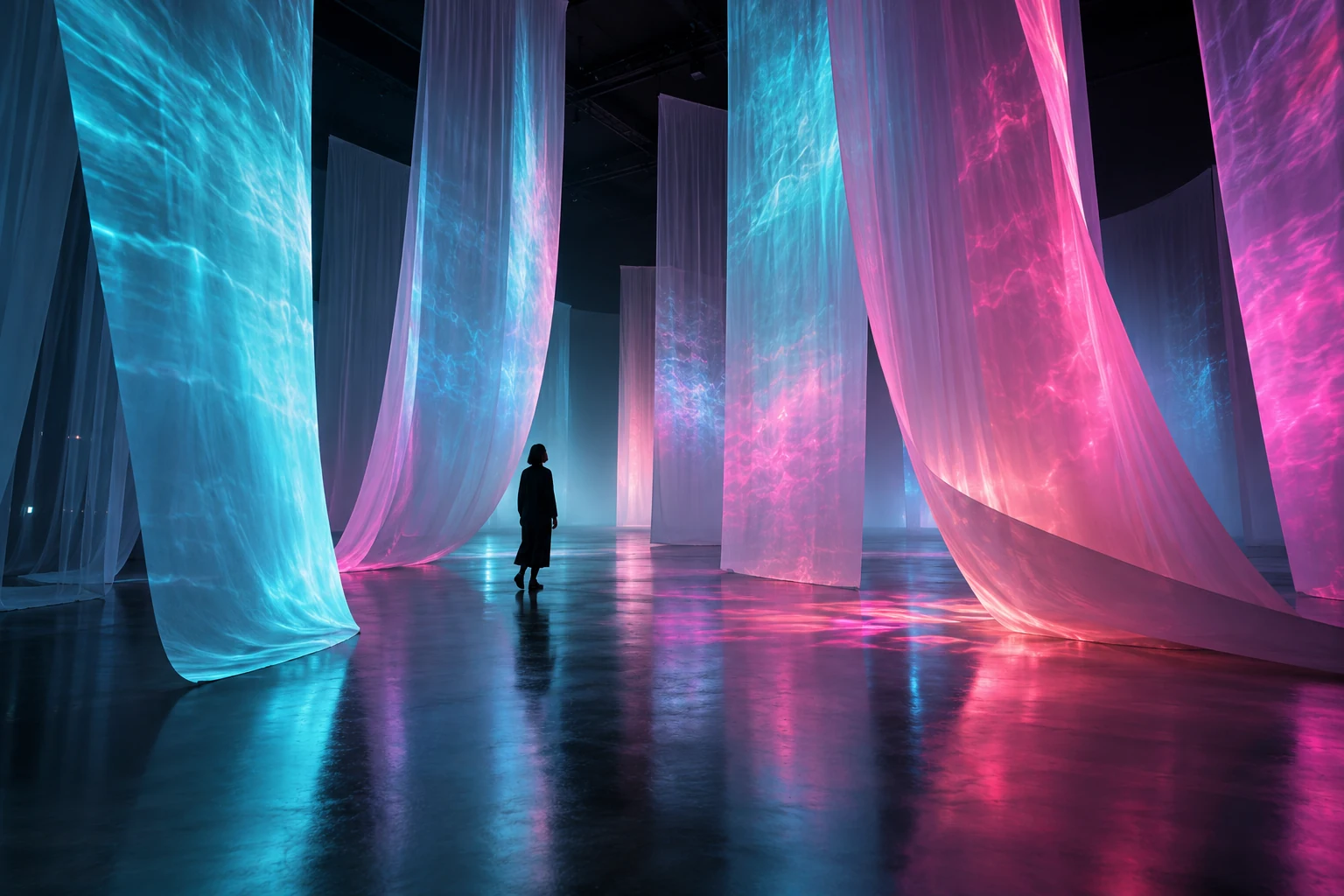
Understand interactive art through the relationship between a participant's action and an artwork's response, then prototype a small piece whose behavior changes how it is experienced.
Build a compact interactive artwork by isolating one input and one response, testing the relationship in a rough prototype before adding sensing technology or decorative complexity.
Plan a modest room-scale artwork around a clear encounter, a limited active area, and a response that remains understandable when several people approach the piece.
Create a browser drawing experiment in which speed or direction changes the mark, while separating input tracking from the visual rule so the gesture remains readable.
Map a sound's changing amplitude to a restrained visual response, using a known audio source and a quiet-state check before attempting complex audiovisual behavior.
Use a potentiometer as a continuous artistic control, calibrating its observed range before mapping it to a small drawing system or physical visual response.
Build a one-button artwork around explicit press behavior, distinguishing a held state from a new action and handling physical switch noise before interpreting it artistically.
Prototype a fabric or foam switch as an expressive physical input, separating reliable contact from the decorative surface before connecting it to a modest low-voltage artwork.
Prototype near-and-far behavior with simple spatial thresholds, testing the artistic logic manually before choosing any sensing technology for a finished installation.
Build an artwork in which the participant changes a shadow's size, overlap, or sharpness, using a simple light-and-screen setup to make the gesture visible.
Design a shared drawing system with a clear contribution rule, making individual actions visible while allowing their accumulation to become a larger collective form.
Make a playful artwork around exploration and consequence, using a clear action rule and a discoverable transformation instead of assuming that every game needs points.
Develop a short performance system in which repeated gestures alter a visual response, keeping the audience able to perceive the relationship between movement and change.
Explore projection with a small white paper form, aligning a few graphic shapes to its surfaces and testing how viewpoint and ambient light affect the result.
Use movable physical tokens to explore an artwork's state, prototyping the relationship manually so the objects' shapes and positions contribute to the experience.
Create a participatory paper creature with an obvious action and a surprising response, keeping the mechanism visible enough for children to adapt the idea themselves.
Turn a small set of observations into a visual system, making collection rules and mapping choices explicit while avoiding claims that a personal sample represents everyone.
Design a small artwork that accumulates participant actions over time, separating its persistent structure from its temporary response so the history remains meaningful and manageable.