Interactive performance: give the gesture a visible consequence
Develop a short performance system in which repeated gestures alter a visual response, keeping the audience able to perceive the relationship between movement and change.

Gesture and response share the stage
An interactive performance brings a live gesture into a responsive system. The system may be operated manually or through technology, but the audience needs a reason to connect action and consequence. Begin with one repeated gesture that has a clear shape and rhythm.
Assign one response to a repeated gesture
Choose a gesture such as reaching, folding, circling, or pausing. Assign it one visible consequence and rehearse at a small scale. Have a collaborator operate a paper or light response first. This allows you to adjust the timing without also debugging a sensor.
Make response delay after the gesture explicit in the working notes before building the full piece. Work from a rough thumbnail or a small physical mockup. Mark the feature that must remain stable and the feature that is allowed to change. Those marks provide a reference when several plausible variations begin competing for attention. A useful acceptance check is whether the audience can connect movement with the visible change. Judge that at the intended viewing size or working distance, where tiny construction mistakes and exaggerated effects can have very different consequences.
Align the response with a readable movement
If the response arrives before the gesture is readable, delay the change slightly or clarify the movement. If the system dominates the performer, reduce the response's range. The goal is a relationship in which both gesture and transformation contribute to the event.
When the result becomes confusing, return response delay after the gesture to its recorded starting point. Try an ordinary action, an incomplete action, and two actions in quick succession. Watch whether the piece acknowledges each input and returns to a usable state afterward.
Repeat one gesture at three durations
Perform the same gesture three times with different durations. Keep the response rule consistent and observe whether the audience could infer the connection. Then change the rule once as an intentional departure rather than a random surprise.
Make three comparison versions using immediate, a small pause, and a conspicuous lag. Choose one visible feature to compare before starting. Inspect it across the entire set rather than letting the most dramatic result dictate the criterion afterward. Keep both a preferred version and a useful failed version, with a short note describing the difference between their behavior.
Rehearse the response with a human operator
Use a collaborator to open the paper rings during the first arm-circle rehearsal. Agree on the gesture landmark that counts as completion, such as the hand returning to its starting height. Compare an immediate response with a small intentional delay. This manual rehearsal reveals the desired timing before sensing errors enter the system. If technology is later introduced, test it against that established performance relationship rather than letting sensor convenience dictate the choreography.
Paper rings following arm circles
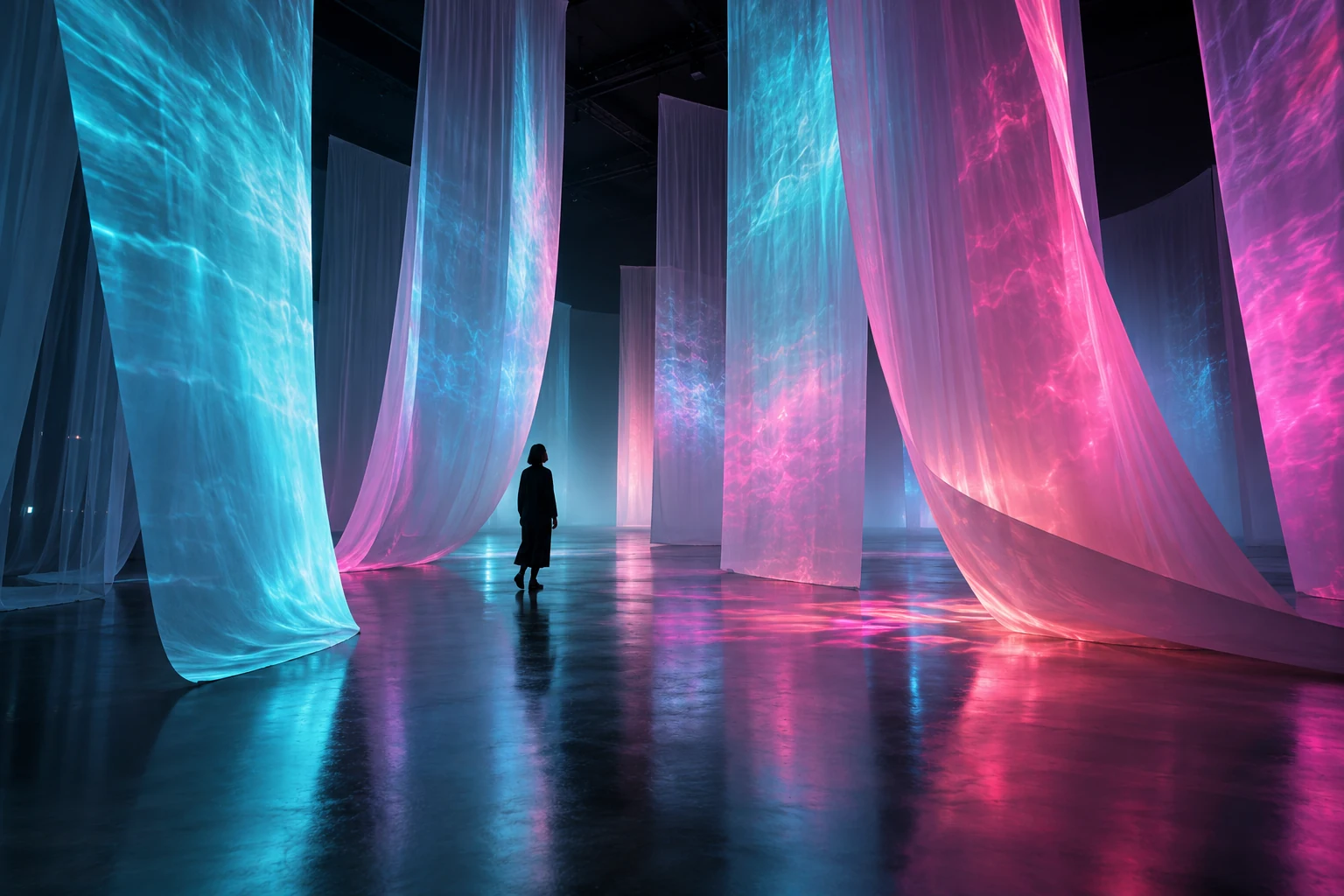
Create a performance in which each slow arm circle opens another ring in a paper projection. A held pose lets the rings settle; a reversed circle closes them. The repeated vocabulary makes the eventual reversal understandable as part of the performance's language.
References & further reading
Examples and exercises in this guide are original teaching scenarios.