Anticipation in animation: make the action easier to read
Prepare an action with a small preceding movement, choosing the direction and duration of that preparation so the main event feels motivated and easy to follow.

A preparation that earns its duration
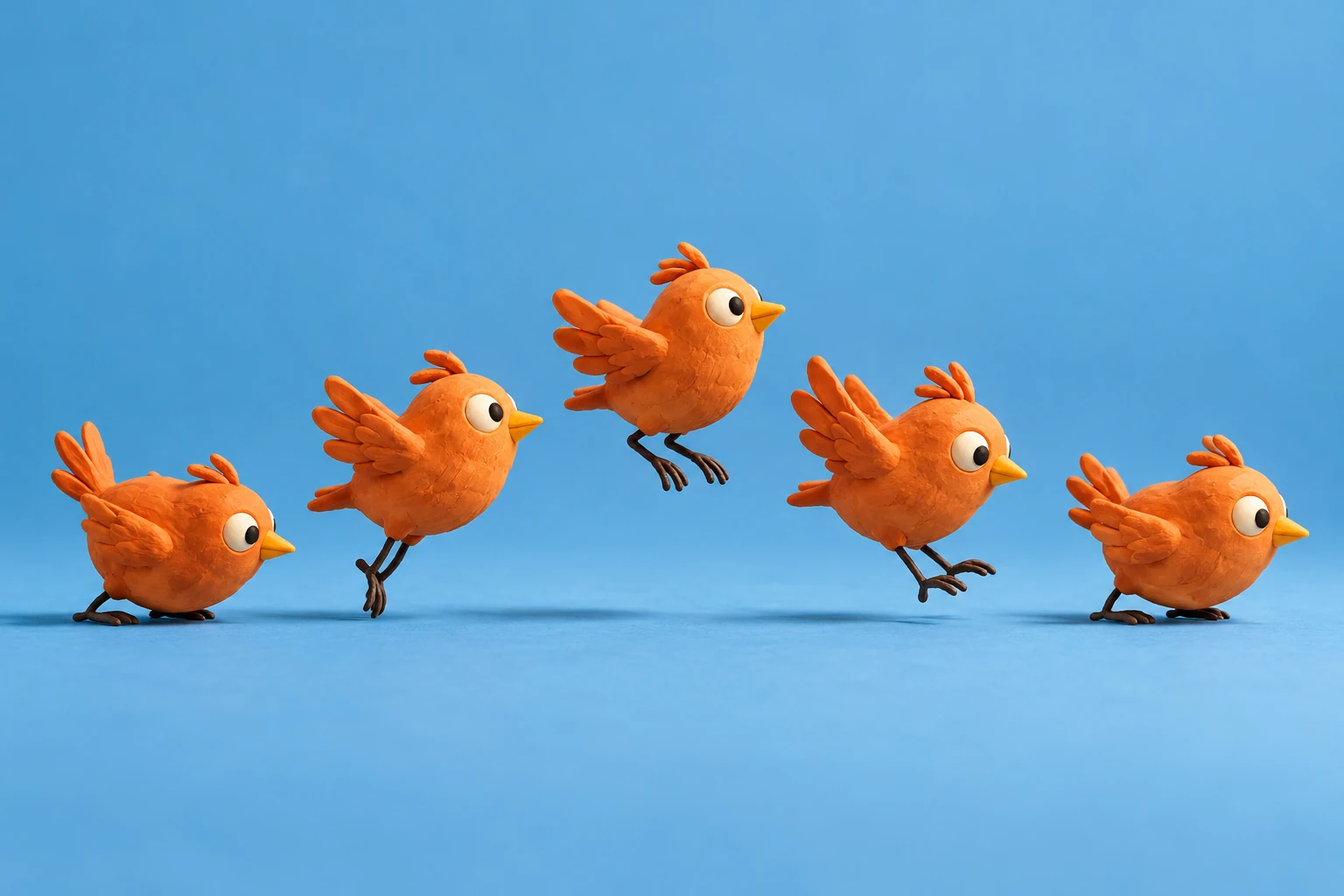
An action often becomes clearer when the viewer sees a preparation. A character may lean before running, or a spring may compress before releasing. Anticipation gives the next movement a context. It can be quiet and brief; it does not need to become a theatrical windup.
Separate preparation, release, and result
Plan the main action first and identify its decisive direction. Add a smaller preparation that stores energy, redirects attention, or establishes intention. Mark the preparation, the release, and the result as separate beats. Give each beat an unmistakable silhouette.
Write down the current setting for anticipation duration before making a second interpretation of the idea. Keep the first pass deliberately modest in scale. A manageable version is easier to inspect, undo, and reconstruct. Increasing complexity should answer a visible artistic need, rather than simply making the process look more elaborate. A useful acceptance check is whether the preparation explains the action without overpowering it. Judge that at the intended viewing size or working distance, where tiny construction mistakes and exaggerated effects can have very different consequences.
Keep the windup from overpowering the action
If the preparation feels like hesitation, shorten its hold or make its relationship to the main action clearer. If the main action loses force, check whether the windup travels farther or lasts longer than the event it was meant to support.
To locate a fault, inspect the part of the result most directly affected by anticipation duration. Review the movement as a strip of still moments as well as in playback. Inspect the pose immediately before and after a confusing event.
Compare three ways to prepare a hop
Animate a small disc hopping across a gap. Make one version with no preparation, one with a brief downward dip, and one with an exaggerated long compression. Compare which version best communicates confidence.
Arrange a small experiment with a quick beat, half the main action, and the full main-action duration, keeping its other decisions consistent. Predict one consequence before each trial, then compare that prediction with the actual result. Record a surprise in plain language and identify the part of the construction that could explain it. This turns a set of variations into information you can use in a later, more ambitious piece.
Check the direction of the promise
In the hopping-disc exercise, draw an arrow for the eventual jump and another for the preparation. A downward compression can prepare an upward jump, while a small backward shift can prepare forward travel. If the preparation suggests a different action from the one that follows, the surprise should be intentional. Keep the final landing unchanged while comparing these alternatives, so the experiment remains focused on how the action begins.
A kite preparing to surge
Make a paper kite pull backward slightly before surging upward. Let the attached tail remain loose during the preparation and straighten after release. The change in the tail helps distinguish stored energy from the movement that finally spends it.
References & further reading
Examples and exercises in this guide are original teaching scenarios.