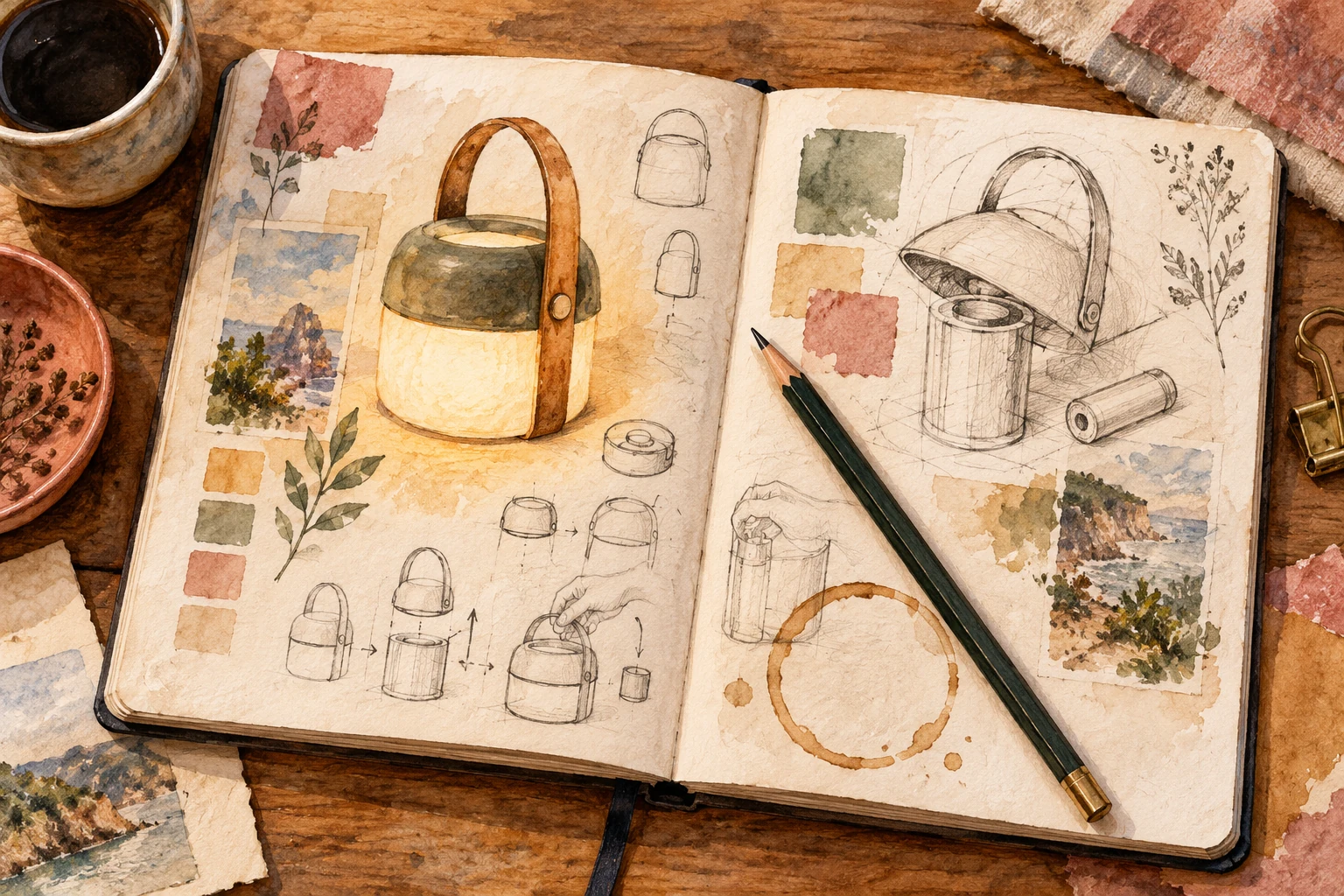
Thumbnail sketches: solve a composition before detailing it
Use tiny, fast drawings to compare framing, light-dark masses, and focal placement, then choose a direction with evidence instead of polishing the first idea.
Follow a topic, look up a technique, or find an idea to try.
Use tiny, fast drawings to compare framing, light-dark masses, and focal placement, then choose a direction with evidence instead of polishing the first idea.
Analyze a style through structure, type, image treatment, and production, then adapt its useful decisions to a new brief without copying a recognizable composition.
Build an expressive poster from the actual wording, control line breaks and negative space, and preserve essential information while exploring scale and arrangement.
Identify the argument behind a brief, generate visual metaphors from relationships, and test whether an original illustration adds meaning beyond repeating the headline literally.
Create onboarding for a creative reference tool by finding its first useful action, delaying optional setup, explaining permissions, and supporting a clear return to unfinished work.
Create a content plan for a materials-loan service that connects decisions, source ownership, updates, interface states, and retirement so guidance remains useful beyond the launch page.
Review an arts publication with user-adjusted text spacing, looking for clipping, overlaps, fixed heights, hidden controls, and lost relationships while preserving content rather than forcing one typographic setting.
Compare how other creative services support a specific task, distinguishing observed behavior from inferred intent, recording conditions, and translating useful questions into original design exploration.
Turn a promising sketch into a coherent small series by recording parameters, defining meaningful limits, and editing related images through deliberate comparison.
Compare playback rate, drawing changes, and held poses so you can choose a rhythm for a short animation without assuming that more frames always improve the action.
Turn a small set of observations into a visual system, making collection rules and mapping choices explicit while avoiding claims that a personal sample represents everyone.
Make a folded book that changes through opening, choosing a sequence and support method that let the object work as both a handheld narrative and a standing form.
Explore how color relationships support an intended atmosphere while accounting for context, imagery, materials, and the expectations of the people who will see the work.
Develop a cover concept from the book’s actual promise, test a readable small version, and prepare the spine and back as part of one physical object.
Develop a lettering-based identity through proportion, spacing, and restrained customization, then test the complete name at realistic sizes and prepare usable variants.
Prepare a readable sketch, choose a line treatment for the final size, and use digital layers and restrained smoothing to refine contours without polishing away useful character.
Use an exhibition audio-guide task to connect goals, actions, system states, feedback, and context, then turn a simple interaction model into a practical prototype.
Compare creative workshop options through meaningful attributes, consistent definitions, missing information, total commitments, and narrow-screen reading without turning the page into an unexplained feature checklist.
Plan workshop-booking expiry through clear timing, available extensions, saved answers, honest capacity rules, and safe recovery, distinguishing security or inventory constraints from avoidable pressure.
Plan a revision cycle for a workshop-booking review page by identifying uncertainty, changing a reasoned variable, examining the result, and keeping evidence separate from assumptions and cosmetic churn.
Use temporary visual evidence to locate errors in generative artwork, separating drawing state, geometry, and changing values before adding more complexity.
Prepare a short animation for sharing by checking dimensions, frame sequence, loop boundaries, and the final viewing context before generating a large finished file.
Design a small artwork that accumulates participant actions over time, separating its persistent structure from its temporary response so the history remains meaningful and manageable.
Plan a small wearable artwork around a sewable low-voltage light module, keeping conductive paths separated and the electrical assembly removable for inspection and care.