Frame rate and animation holds: choose the rhythm deliberately
Compare playback rate, drawing changes, and held poses so you can choose a rhythm for a short animation without assuming that more frames always improve the action.

Stillness belongs to the rhythm
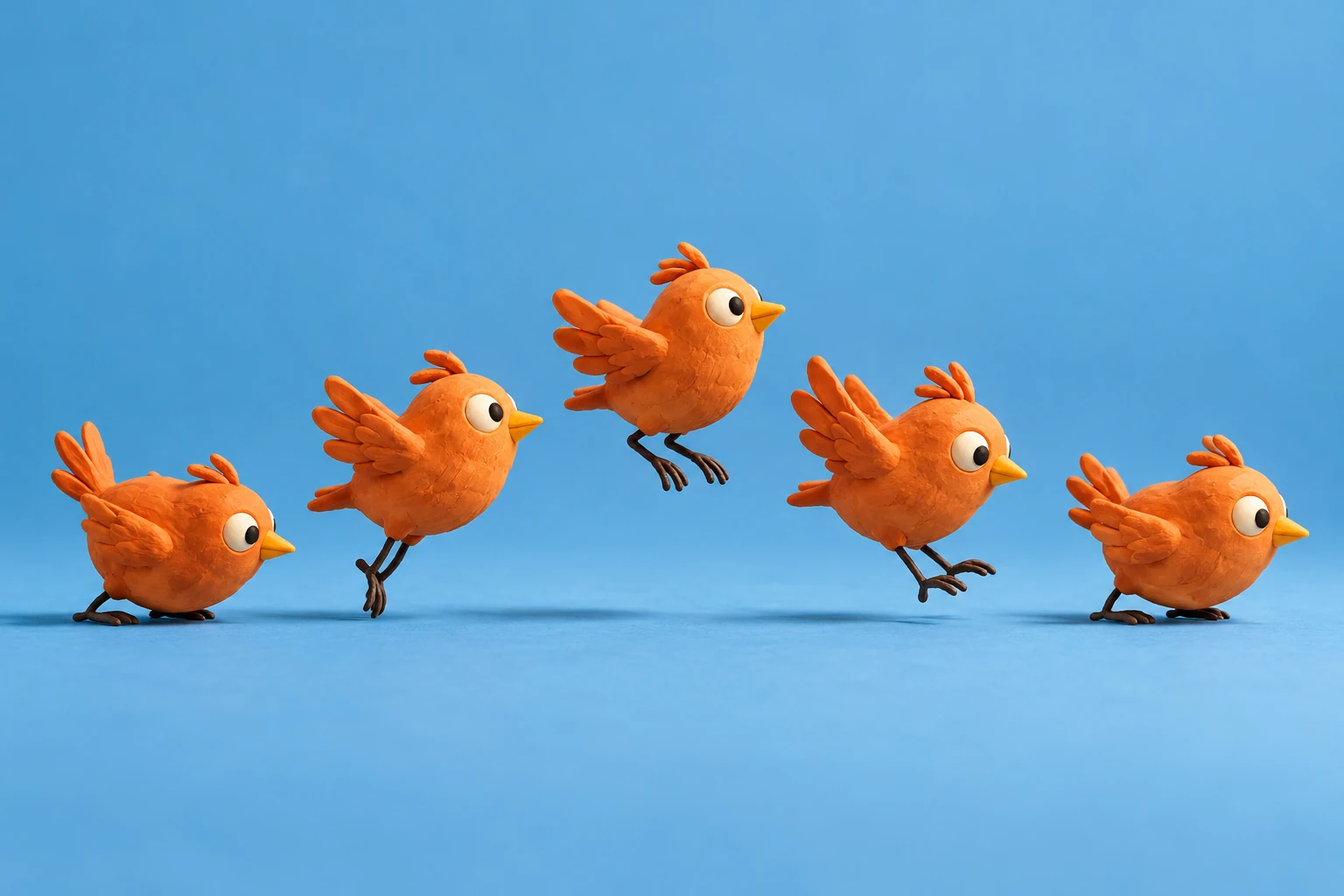
Playback rate and the number of new drawings are different decisions. A sequence can display many frames while holding one drawing for several of them. That choice affects rhythm, labor, and the kind of movement the audience perceives. Begin with the action rather than a prestige number.
Separate playback duration from new drawings
Make a short movement with a small set of drawings. Play it at two durations without changing the drawings. Then keep the duration fixed and add or remove intermediate positions. These experiments separate overall speed from the density of visible changes.
Set up the first proof around drawing hold length, using a value you can recognize in the finished result. Begin with the smallest version that demonstrates the proposed relationship. Remove secondary decoration while checking its construction. A tiny proof makes incorrect assumptions visible before they multiply across the finished work. A useful acceptance check is whether the rhythm feels deliberate and the important poses remain readable. Judge that at the intended viewing size or working distance, where tiny construction mistakes and exaggerated effects can have very different consequences.
Inspect holds and large position gaps
If the animation feels sluggish, inspect held poses and total duration. If it feels choppy, inspect the largest spacing changes. Adding duplicated frames will lengthen a hold but will not fill a missing position between two distant poses.
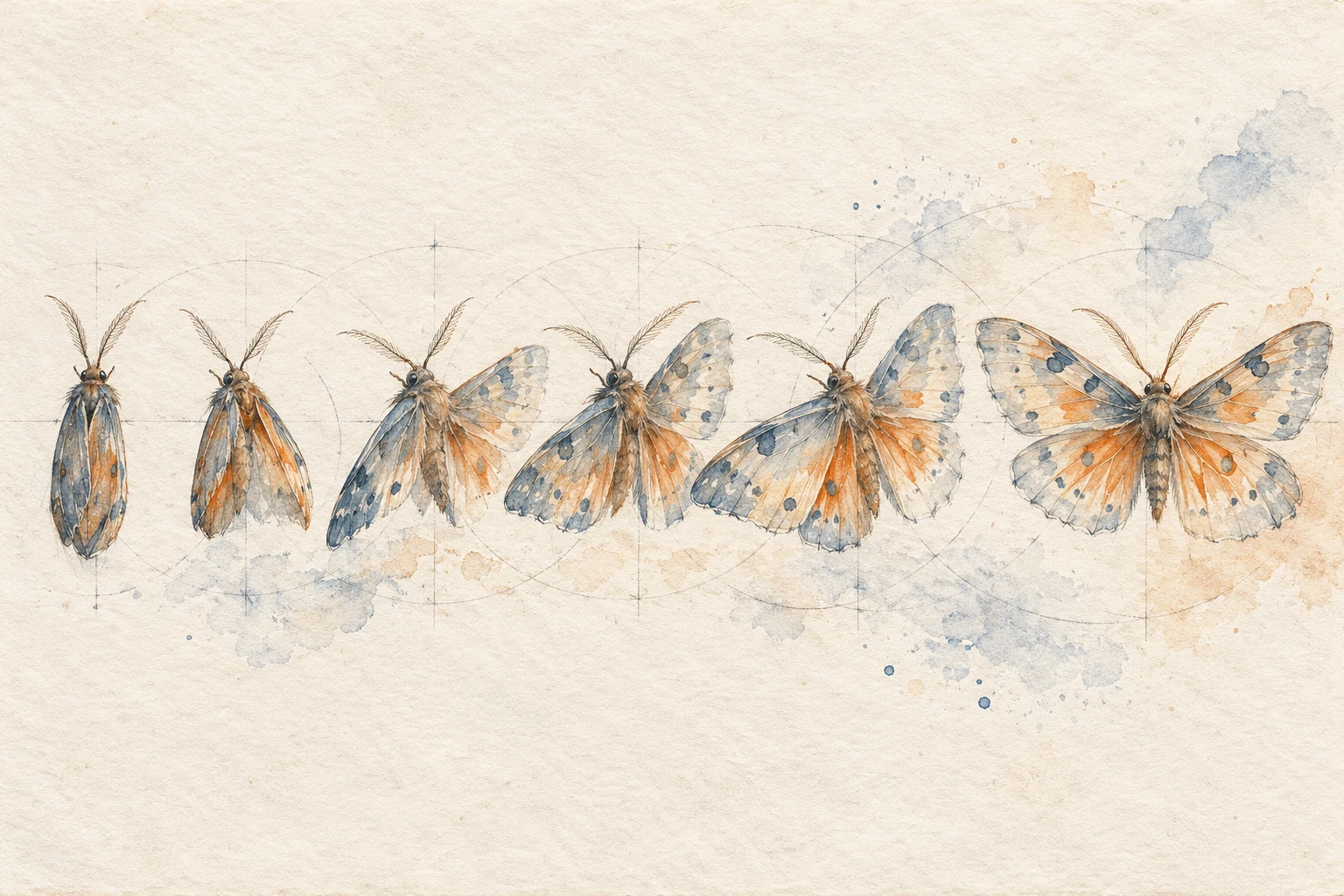
Before rebuilding everything, compare the current drawing hold length setting with the last understandable version. Review the movement as a strip of still moments as well as in playback. Inspect the pose immediately before and after a confusing event.
Contrast a sparse crossing with a held stop
Animate a paper disc crossing a tabletop, then stopping abruptly. Keep the crossing relatively sparse but hold the stopped pose long enough to register. Compare that phrase with a version that distributes every drawing evenly.
Reserve one trial each for one display interval, two intervals, and four intervals. Place the results together, or replay them in a fixed order when movement matters. Look for the smallest change that alters the reading of the work. If every trial produces a different problem, reduce the distance between the settings and investigate the transition instead of choosing an extreme.
Write the display schedule explicitly
For the blinking creature, use a schedule such as open, open, open, closed, open, then vary how long each state remains. The repeated open entries represent a hold, not newly drawn movement. Compare that schedule with a version that adds a half-closed pose. The added drawing may soften the blink, but the long rest still defines its rhythm. Keep the total interval between blinks separate from the blink's own duration.
A blinking desk creature
Create a blinking desk creature with a long open-eyed hold, a quick closed-eye drawing, and a return. Use the pause as part of the performance. The effective rhythm comes from the relationship between stillness and change, not continuous activity.
References & further reading
Examples and exercises in this guide are original teaching scenarios.