Pagination or infinite scroll for an art collection?
Choose collection browsing behavior from the need to resume, compare, share, reach the footer, and preserve position, then prototype the return journey as carefully as discovery.

Support discovery and deliberate return
An art collection invites exploration, yet its browsing controls also need to support purposeful return. Infinite scrolling can sustain casual discovery, while pagination can provide recognizable segments and addressable views. A Load more control offers another option. Choose by the browsing task and implementation constraints rather than assuming that one pattern is universally modern.
Define which browsing context survives
List what readers need to preserve: filters, position, selected items, and the route back from a detail page. Decide whether a collection segment needs its own address. Make the loading action explicit and keep the footer reachable. The right choice should support both finding something new and returning to something already noticed. Make the tradeoff visible on paper before choosing the most polished option. One version may expose more information while another saves space; neither advantage automatically resolves the task. Label the decision point, the evidence available there, and the cost of a mistaken choice. Prefer the arrangement that lets a person understand and correct that choice without reconstructing the entire journey from memory.
Browse and revisit thirty references
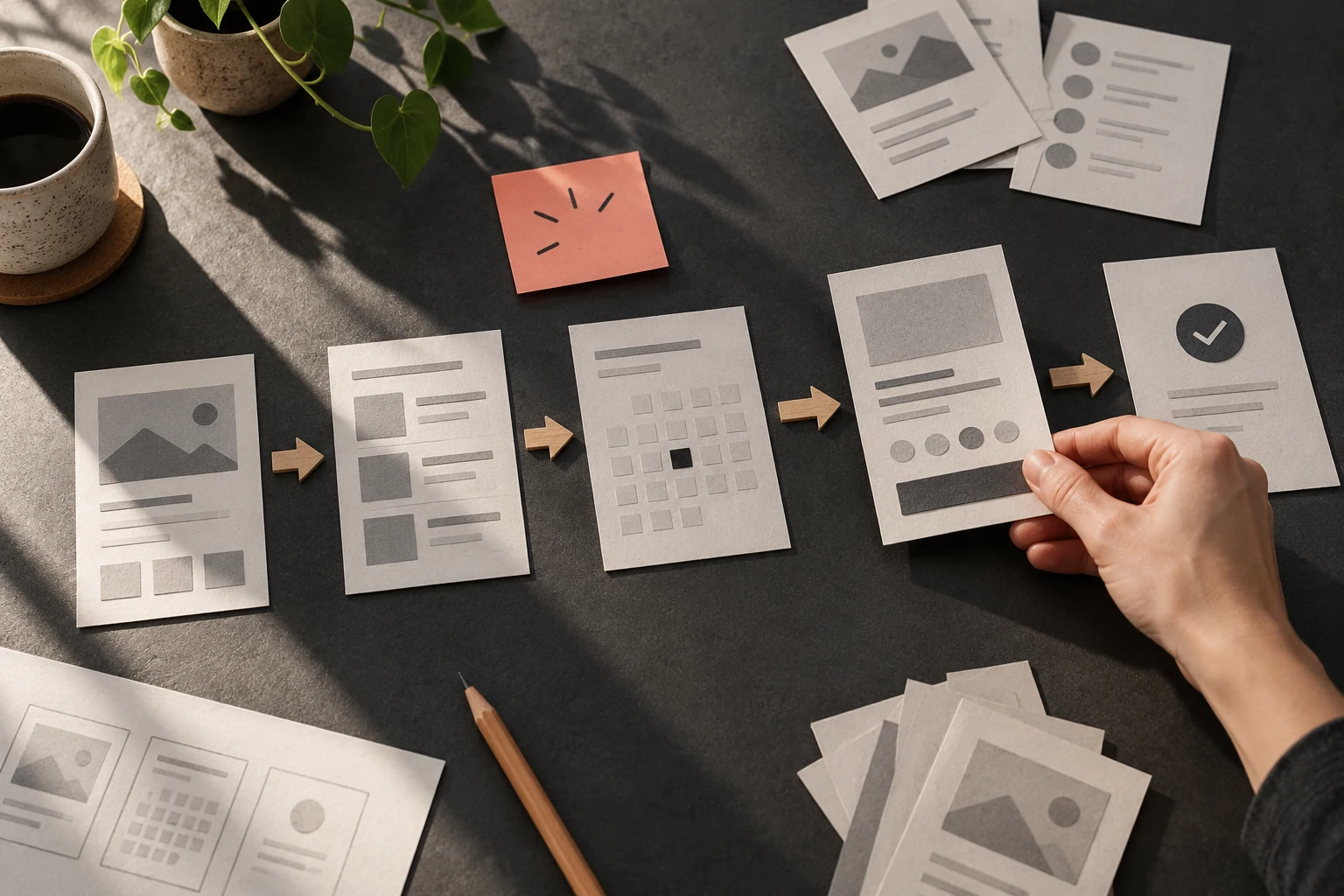
Prototype browsing thirty sample references, opening the twenty-third, and returning to the list. Repeat with pagination and Load more. Include active medium filters and an image that fails to load. Record which context must be restored for the person to continue where they left off. Give the artifact to a colleague with the task description but without the design rationale. Ask them to describe what they expect before making a choice. Compare that expectation with the result the prototype supplies. If they differ, locate the cue that created the expectation. Changing a label, grouping, or sequence may resolve the mismatch more effectively than adding a longer explanation after the action.
Fix lost position and unreachable content
If returning from a detail page resets the collection, the browsing experience loses continuity regardless of the chosen pattern. Endless automatic loading can also make lower-page information difficult to reach. If pages contain too little content, repeated navigation creates unnecessary effort. Evaluate the whole browse-and-return sequence instead of one initial list. Reproduce the problem from its actual starting state instead of inspecting only the final screen. Trace which information disappeared, which expectation was set, and which action became unavailable. Fix the earliest misleading cue that you can identify. A patch at the end of the sequence may quiet one symptom while leaving the same confusion in every other route through the task.
Write a browsing contract
Review keyboard progression, link behavior, loading failure, and a return from a saved address. Make restoration rules explicit in the handoff. The useful outcome is a deliberate browsing contract: what loads, how the person asks for more, what their address represents, and which context survives when they leave the collection. Include a reader who opens several details in separate tabs and returns to the original collection afterward.
Worked decision
Open reference 23, inspect it, and return. Keep the active medium filter and enough position context to continue from that neighborhood.
References & further reading
Examples and exercises in this guide are original teaching scenarios.