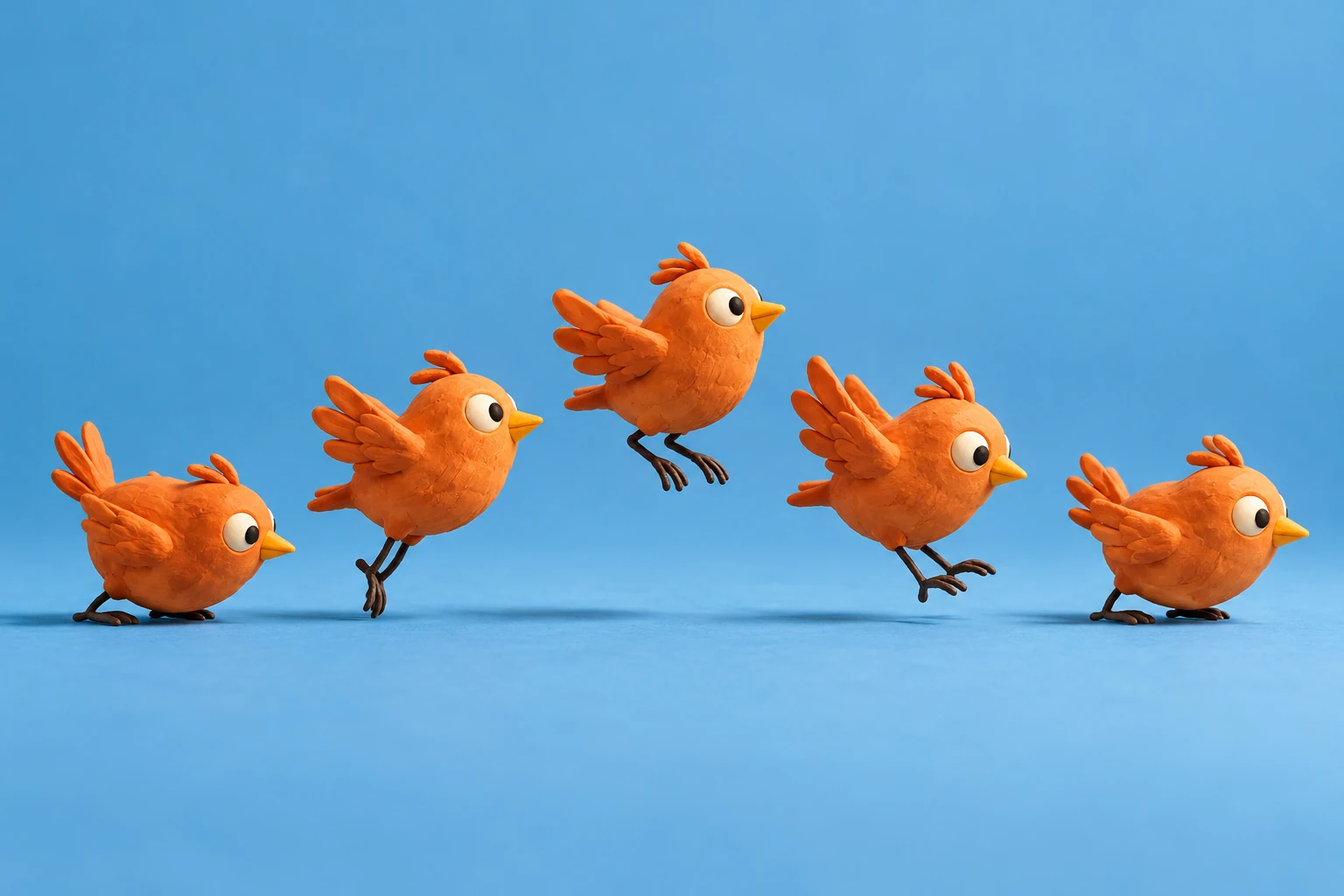
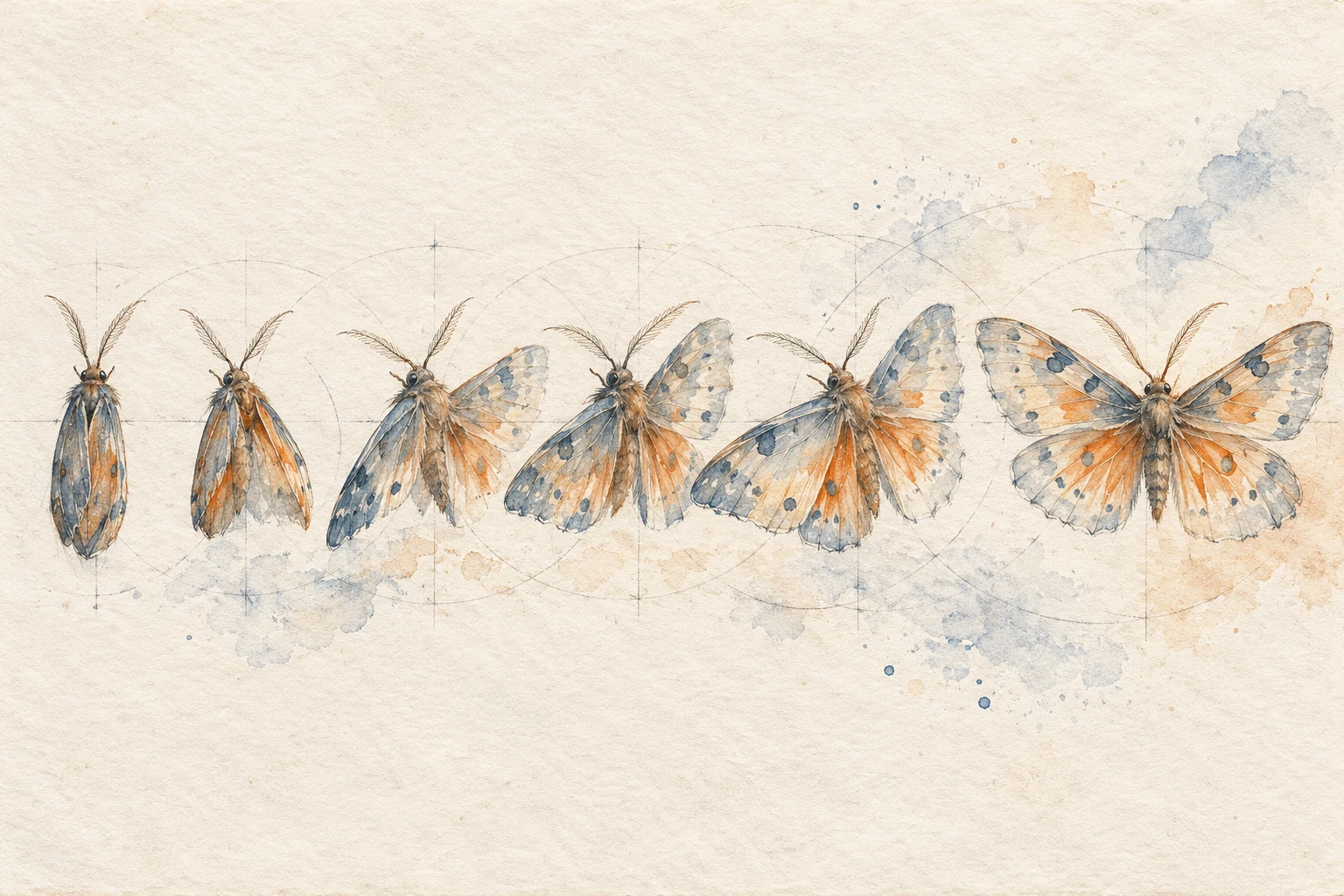
A simple walk cycle with a paper character
Block a repeating walk through contact, passing, and weight shifts, using a small character whose feet and body can be checked independently.

A repeated exchange of support
A walk cycle is a repeated exchange of support. One foot bears weight while the other travels to its next contact. The body responds to that exchange. Start with a simple side-view figure so you can focus on the relationship between feet, hips, and the ground.
Block contact and passing poses
Mark a ground line and draw two contact poses with opposite feet forward. Add a passing pose between them, where the traveling foot moves past the supporting leg. Indicate a small rise and fall in the body. Check the cycle as a sequence of silhouettes.
Set up the first proof around stride length, using a value you can recognize in the finished result. Keep the first pass deliberately modest in scale. A manageable version is easier to inspect, undo, and reconstruct. Increasing complexity should answer a visible artistic need, rather than simply making the process look more elaborate. A useful acceptance check is whether foot contact and body weight tell the same movement story. Judge that at the intended viewing size or working distance, where tiny construction mistakes and exaggerated effects can have very different consequences.
Keep the supporting foot on its ground
Sliding planted feet make the character feel detached from the ground. In a walk that travels through the scene, keep the supporting foot in place during its contact interval. In an in-place cycle, review how the foot moves relative to the implied ground speed.
Before rebuilding everything, compare the current stride length setting with the last understandable version. Review the movement as a strip of still moments as well as in playback. Inspect the pose immediately before and after a confusing event.
Compare an empty cup with a heavy bucket
Make the character carry an empty cup, then an imagined heavy bucket. Keep the leg cycle broadly similar but alter the body's response and the free arm. Compare how the carried weight changes the gesture.
Reserve one trial each for short shuffles, an ordinary stride, and a long reaching stride. Place the results together, or replay them in a fixed order when movement matters. Look for the smallest change that alters the reading of the work. If every trial produces a different problem, reduce the distance between the settings and investigate the transition instead of choosing an extreme.
Separate an in-place cycle from scene travel
Decide whether the character walks across the frame or cycles in one location before checking foot contact. For a traveling walk, compare the planted foot against a fixed ground marker. For an in-place walk, compare its backward motion with the intended ground speed. Mixing those two models can make the foot appear to slide even when individual drawings look plausible. Use a plain leg-and-hip construction until that relationship works.
A bean character changing support
Use a bean-shaped body with two stick legs to walk over a strip of paper. Give each planted foot a tiny visible contact marker during construction. Remove those markers only after the support changes remain readable without them.
References & further reading
Examples and exercises in this guide are original teaching scenarios.