Stop motion at home with ordinary objects
Plan and photograph a short object animation with stable framing, repeatable lighting, and small movement increments, then diagnose flicker and unwanted camera jumps.
A photographed object becomes an actor
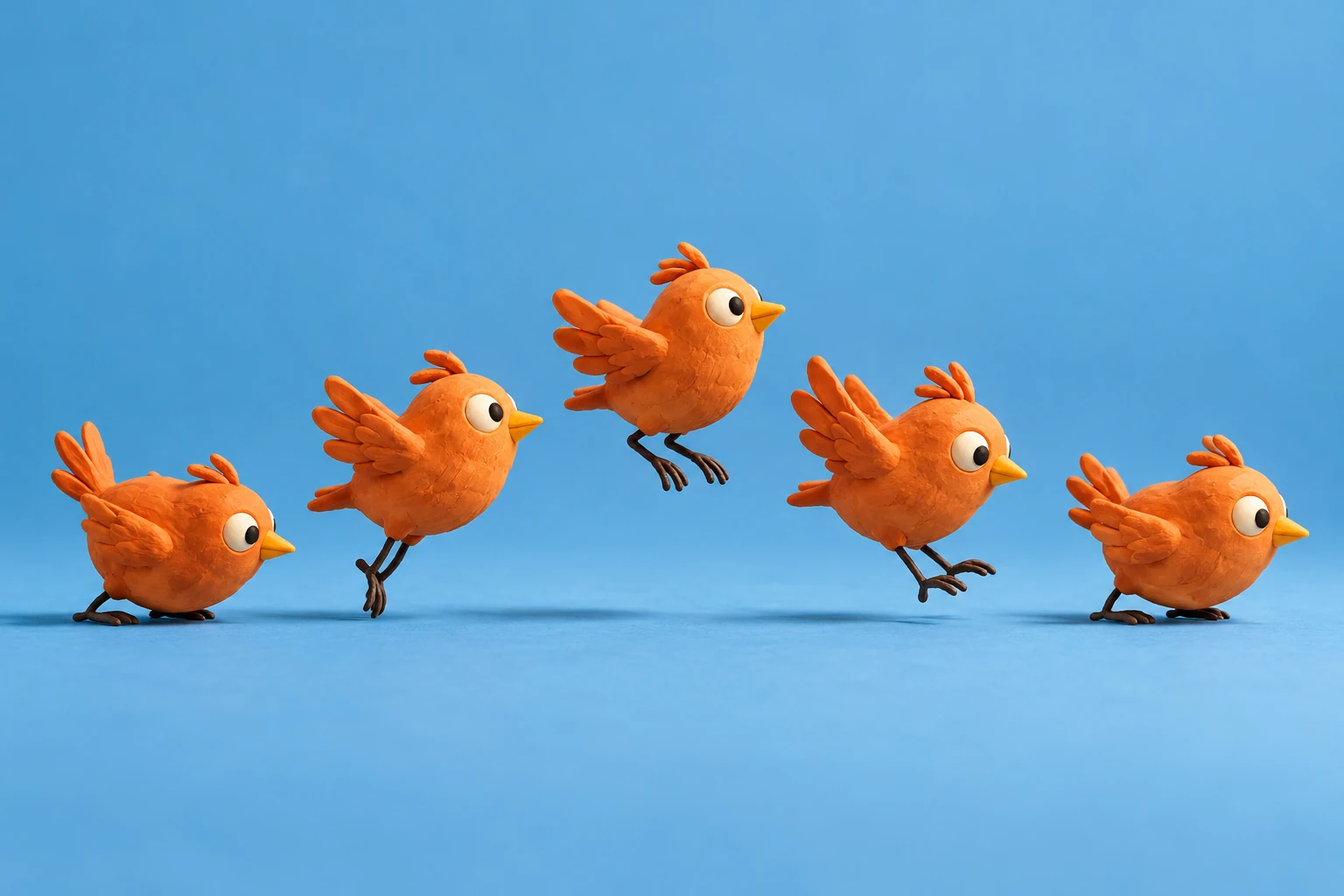
Stop motion turns a sequence of still photographs into an event. Ordinary objects work well because their physical texture remains visible while their behavior becomes impossible. Start with one object, one surface, and a small action that can finish before the setup becomes difficult to maintain.
Secure the camera and capture small moves
Secure the camera, mark the edges of the set, and keep the light source consistent. Photograph the untouched starting scene. Move the object a little, remove your hand, and capture again. Review short runs regularly so a shifted camera is discovered before dozens of later frames depend on it.
Keep a visible note of movement per photograph while assembling the first version. Work from a rough thumbnail or a small physical mockup. Mark the feature that must remain stable and the feature that is allowed to change. Those marks provide a reference when several plausible variations begin competing for attention. A useful acceptance check is whether the object moves deliberately while the set remains stable. Judge that at the intended viewing size or working distance, where tiny construction mistakes and exaggerated effects can have very different consequences.
Separate lighting flicker from camera movement
Unwanted flicker can come from changing daylight, moving shadows, or automatic camera adjustments. A jumping background usually points to camera movement. Diagnose these separately from the intentional movement of the object, which may simply need smaller steps.
Check one local instance of movement per photograph before assuming that the whole composition needs a different approach. Review the movement as a strip of still moments as well as in playback. Inspect the pose immediately before and after a confusing event.
Give a spoon two different approaches
Animate a spoon sliding toward a cup, stopping, and retreating. Keep the camera fixed and vary only the movement spacing. Compare a steady approach with an accelerating one before building a more elaborate story.
Test a compact set of alternatives: a tiny step, a medium step, and a conspicuous jump. Give each trial the same amount of finishing work so polish does not bias the comparison. Review them once as complete pieces and once while concentrating on the changing feature. If your preference reverses, note which artistic goal each version serves more effectively.
Keep a record of the empty set
Capture a reference photograph before placing the paper staircase. Mark the camera support and the corners of the background with removable tape outside the crop. If a piece shifts accidentally, compare against the reference rather than rebuilding the arrangement from memory. Pause to review the first few captured frames as a sequence. A stable-looking still photograph does not guarantee that the framing stayed consistent between photographs.
A staircase that assembles itself
Make a small stack of paper squares assemble itself into a staircase. Add one piece per frame, then let a folded paper traveler climb the steps. Keep a photograph of the empty set so you can restore its arrangement after an accidental bump.
References & further reading
Examples and exercises in this guide are original teaching scenarios.