Morph animation: match the points before moving them
Transform one drawn shape into another by pairing corresponding points and inspecting intermediate silhouettes, with a method for avoiding tangled or collapsing geometry.

Correspondence directs the transformation
A morph is a correspondence problem before it is an animation problem. If one shape's top point is paired with the other's bottom point, the path can fold through itself even though the endpoints look fine. Decide which parts are meant to become which other parts.
Pair equally ordered outline landmarks
Choose two simple outlines with the same number of ordered sample points. Align their starting point and drawing direction. Interpolate each paired point over a shared progress value. Inspect the quarter, halfway, and three-quarter shapes before playing the full transformation.
Keep a visible note of transition duration while assembling the first version. Create a plain reference version before adding expressive variation. Preserve that reference while revising, because memory is poor at comparing subtle differences across separate sessions. Compare the versions in the same viewing conditions. A useful acceptance check is whether the intermediate silhouette remains intentional rather than accidentally tangled. Judge that at the intended viewing size or working distance, where tiny construction mistakes and exaggerated effects can have very different consequences.
Untwist mismatched point correspondence
A twisting transition often means the point order differs. A pinched halfway shape may indicate poor correspondence near a corner. Fix those pairings before adding more samples; a larger list of mismatched points creates a more elaborate version of the same problem.
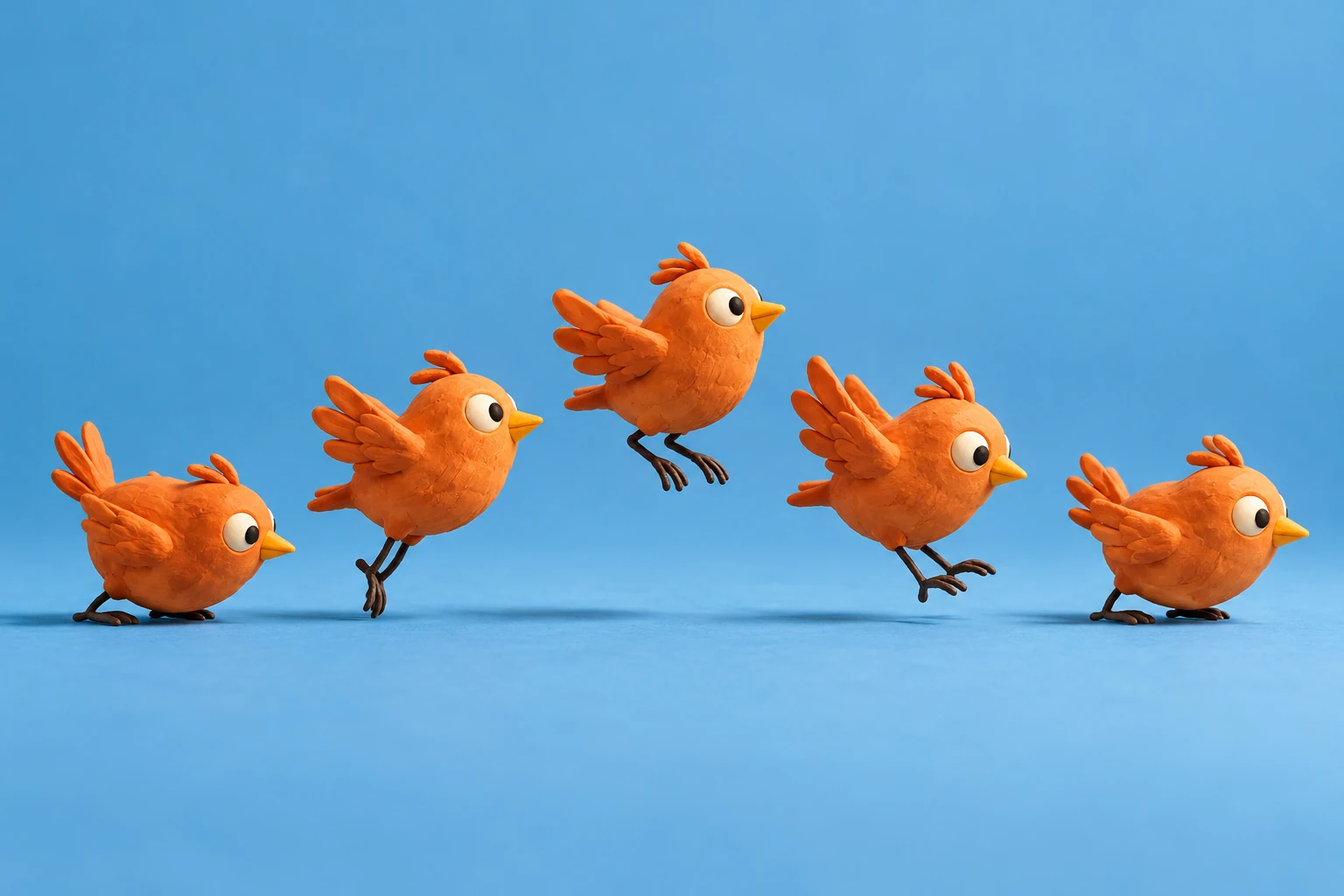
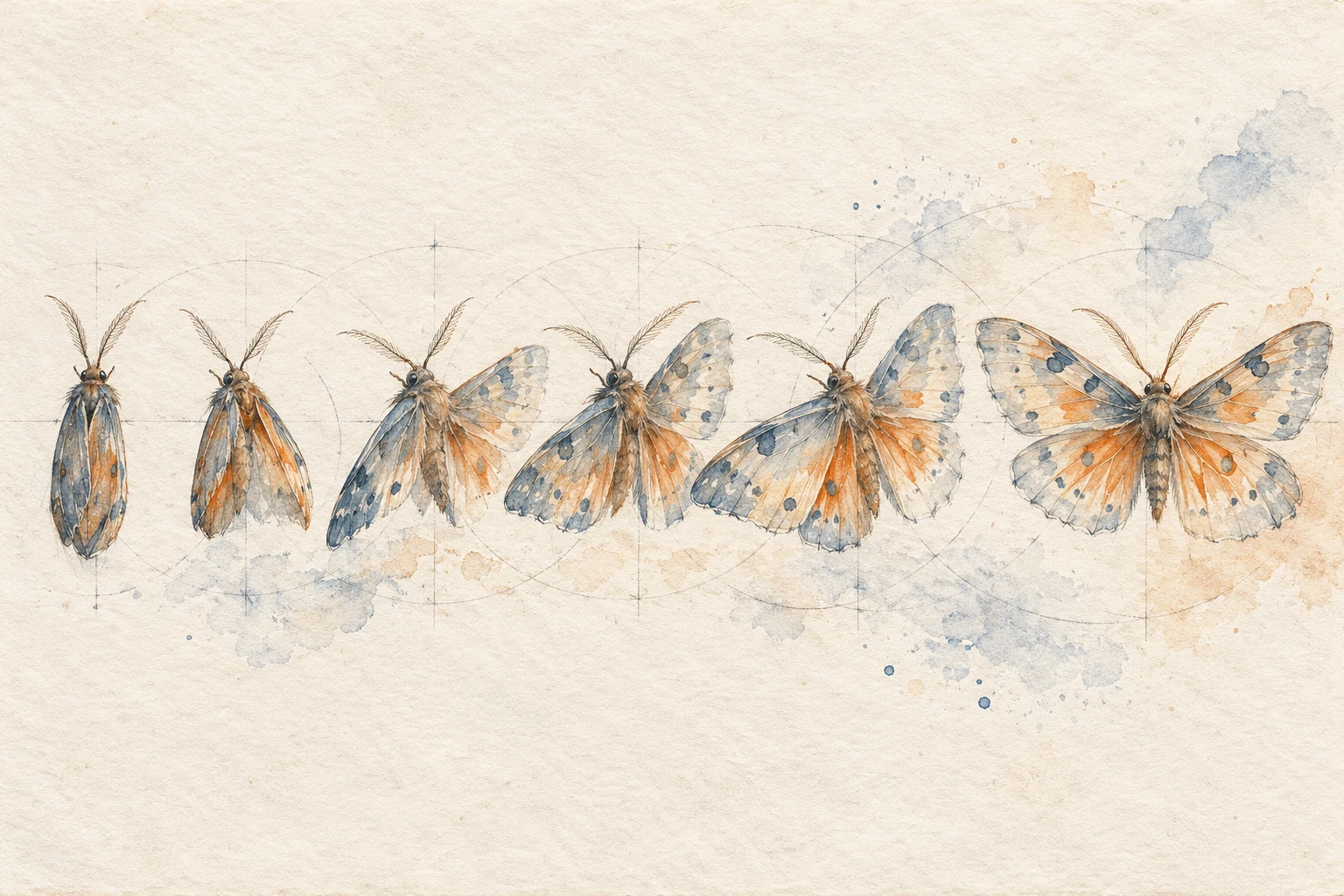
Check one local instance of transition duration before assuming that the whole composition needs a different approach. Review the movement as a strip of still moments as well as in playback. Inspect the pose immediately before and after a confusing event.
Shift one pairing and inspect the halfway shape
Morph a rounded square into a leaf using eight paired landmarks. First keep the corners paired with obvious tips, then deliberately shift the pairing by one position. Compare the intermediate silhouettes to understand how correspondence directs the transformation.
Test a compact set of alternatives: a quick change, a one-second change, and a slow unfolding. Give each trial the same amount of finishing work so polish does not bias the comparison. Review them once as complete pieces and once while concentrating on the changing feature. If your preference reverses, note which artistic goal each version serves more effectively.
Keep landmark order around the outline
Number the eight landmarks clockwise on both the rounded square and the leaf. Start numbering from corresponding features, such as the topmost point. Preview straight lines between each pair of matched points before animating the outline. A crossing correspondence line can reveal a problematic pairing immediately. This does not prohibit dramatic folding or twisting, but it lets you choose that behavior rather than accepting it as an unexplained artifact.
A pebble becoming a flower
Turn a small pebble outline into a four-petal flower. Keep the center fixed and let four selected landmarks grow outward while the others form the valleys. The controlled pairing makes the change read as growth rather than a general wobble.
References & further reading
Examples and exercises in this guide are original teaching scenarios.