Frame-by-frame animation: begin with the key poses
Design a short drawn action through decisive poses, then add intermediate drawings according to the movement rather than filling every gap with equal spacing.
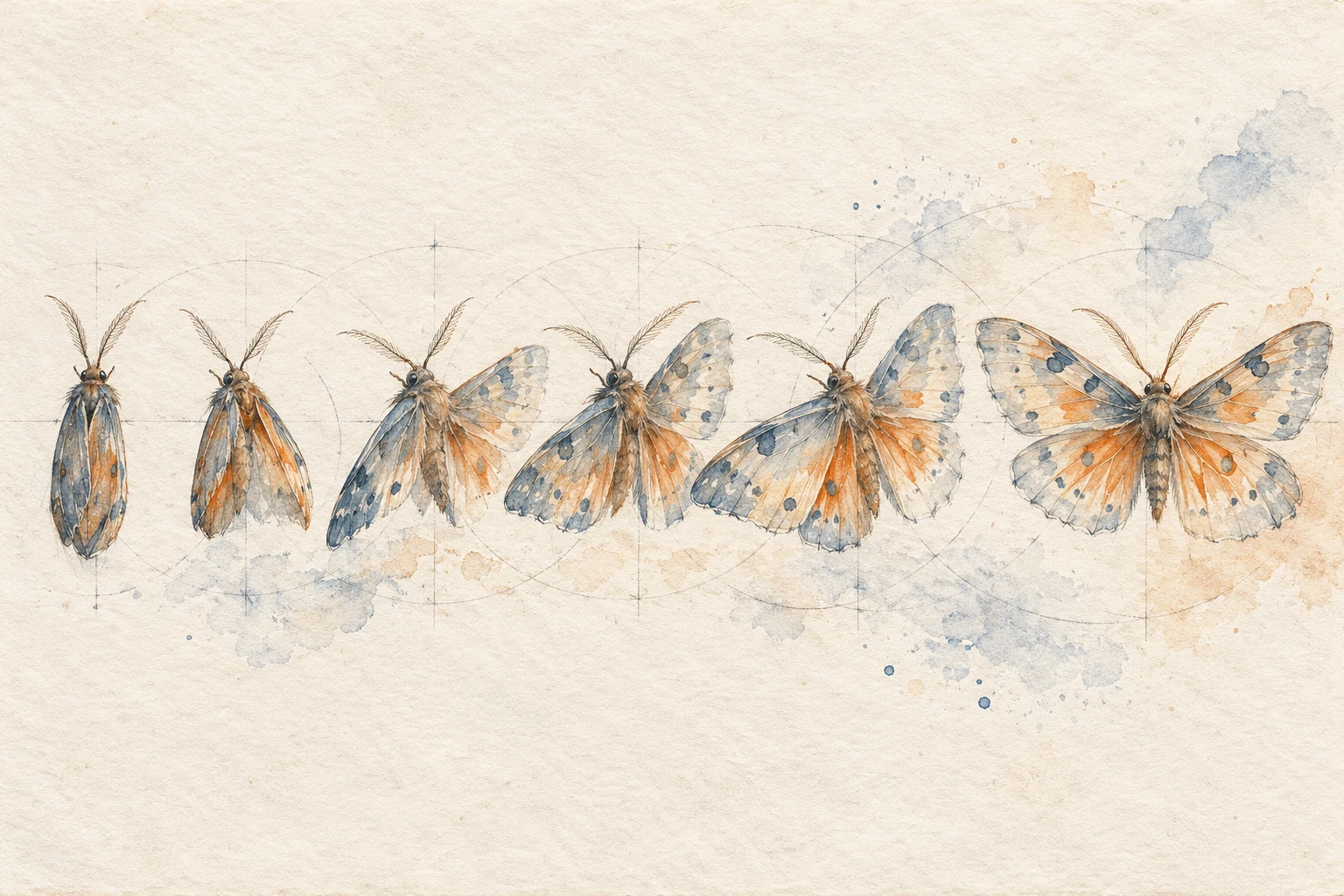
Decisive drawings before in-betweens
Frame-by-frame animation asks you to redraw what changes. That makes it especially useful for forms that bend, transform, or behave in ways a rigid cutout cannot. Begin with the few poses that explain the action. Their relationship matters more than how many drawings you eventually add.
Time the key poses before drawing transitions
Draw the starting pose, the most extreme pose, and the ending pose. Place them on a timeline with intentional holds. Add a drawing halfway through the most difficult transition, then fill other gaps selectively. Keep an underlying construction guide for features that should retain their proportions.
Separate number of in-between drawings from the other decisions so that a later revision has an identifiable cause. Break the construction into a single working unit and a repeated or extended form. Verify the unit on its own first. Only multiply it after its boundaries, movement, and proportions match the proposed rule. A useful acceptance check is whether added drawings improve the transition without diluting the decisive shapes. Judge that at the intended viewing size or working distance, where tiny construction mistakes and exaggerated effects can have very different consequences.
Track stable landmarks through changing shapes
If the figure seems to boil, compare the stable landmarks across frames. If it moves smoothly but feels bland, examine whether the extreme pose is sufficiently different. More intermediate drawings can soften a weak action without making it clearer.
Treat a disappointing result as evidence about number of in-between drawings, rather than immediately adding another effect. Review the movement as a strip of still moments as well as in playback. Inspect the pose immediately before and after a confusing event.
Turn a circle into a folded leaf
Turn a flat circle into a folded leaf through five decisive shapes. Decide where the material seems to bend and maintain that relationship through the transition. Preview the key poses before producing additional drawings.
Use none, two, and six between the key poses as three deliberately separated trial conditions. Keep the subject, framing, and main materials consistent across those trials. Note what changes first, what remains stable, and where the intended effect becomes excessive. Choose a version for an articulated reason. A useful note names a visible relationship that you could inspect again, rather than simply calling the result better.
Track landmarks rather than every edge
In the cloud-to-raindrop example, choose two construction landmarks besides the indentation: the topmost point and the future tip. Trace their positions through the key drawings. They do not need to move at equal speeds, but their paths should make sense. When the silhouette changes dramatically, these landmarks help you decide which intermediate drawing will clarify the transformation. Add that drawing where the relationship is hardest to read.
A cloud becoming a raindrop
Animate a small cloud gathering itself into a raindrop. Preserve one tiny indentation as a landmark until the final transformation. Its movement helps the viewer connect the changing silhouette as one object rather than a series of unrelated drawings.
References & further reading
Examples and exercises in this guide are original teaching scenarios.