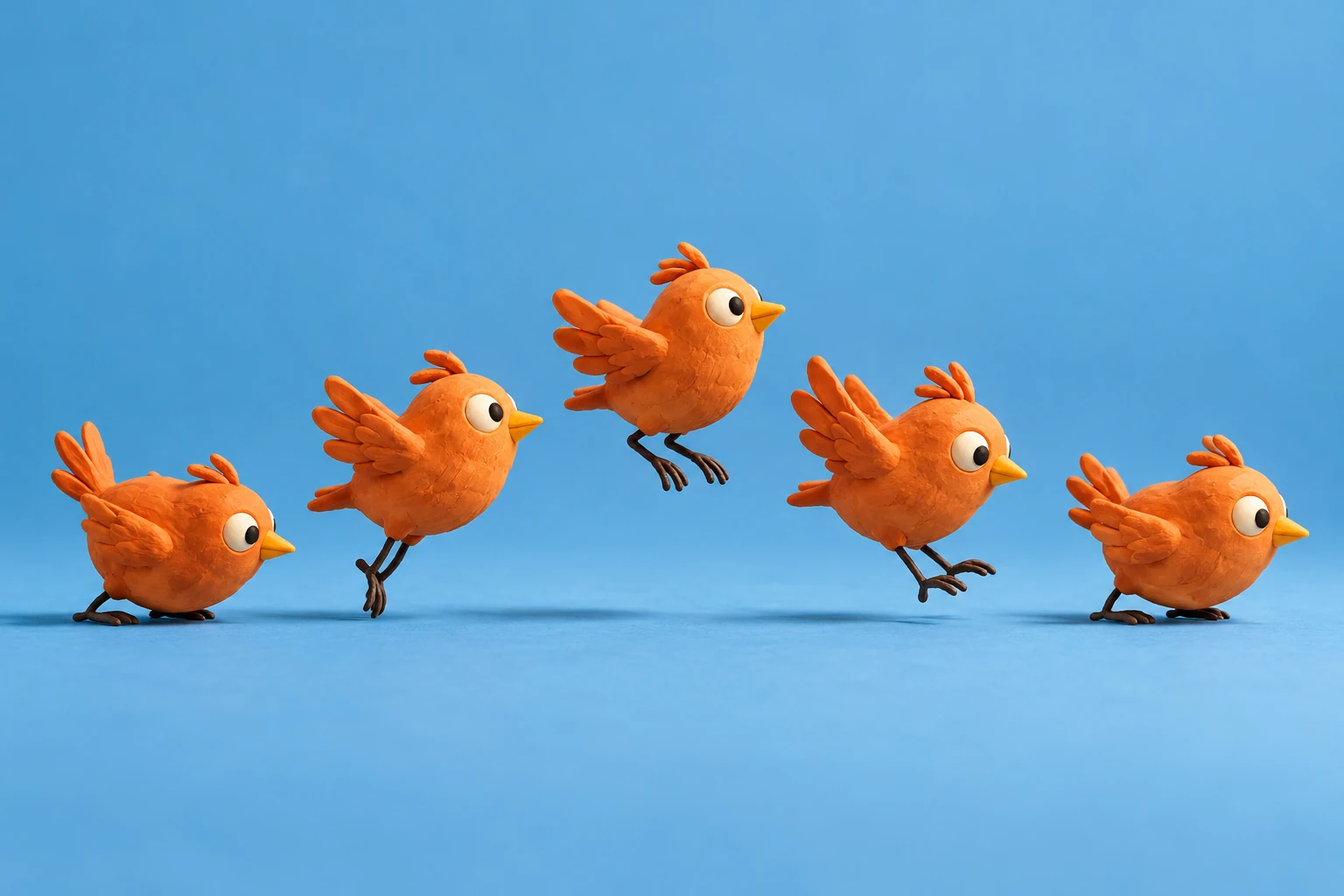
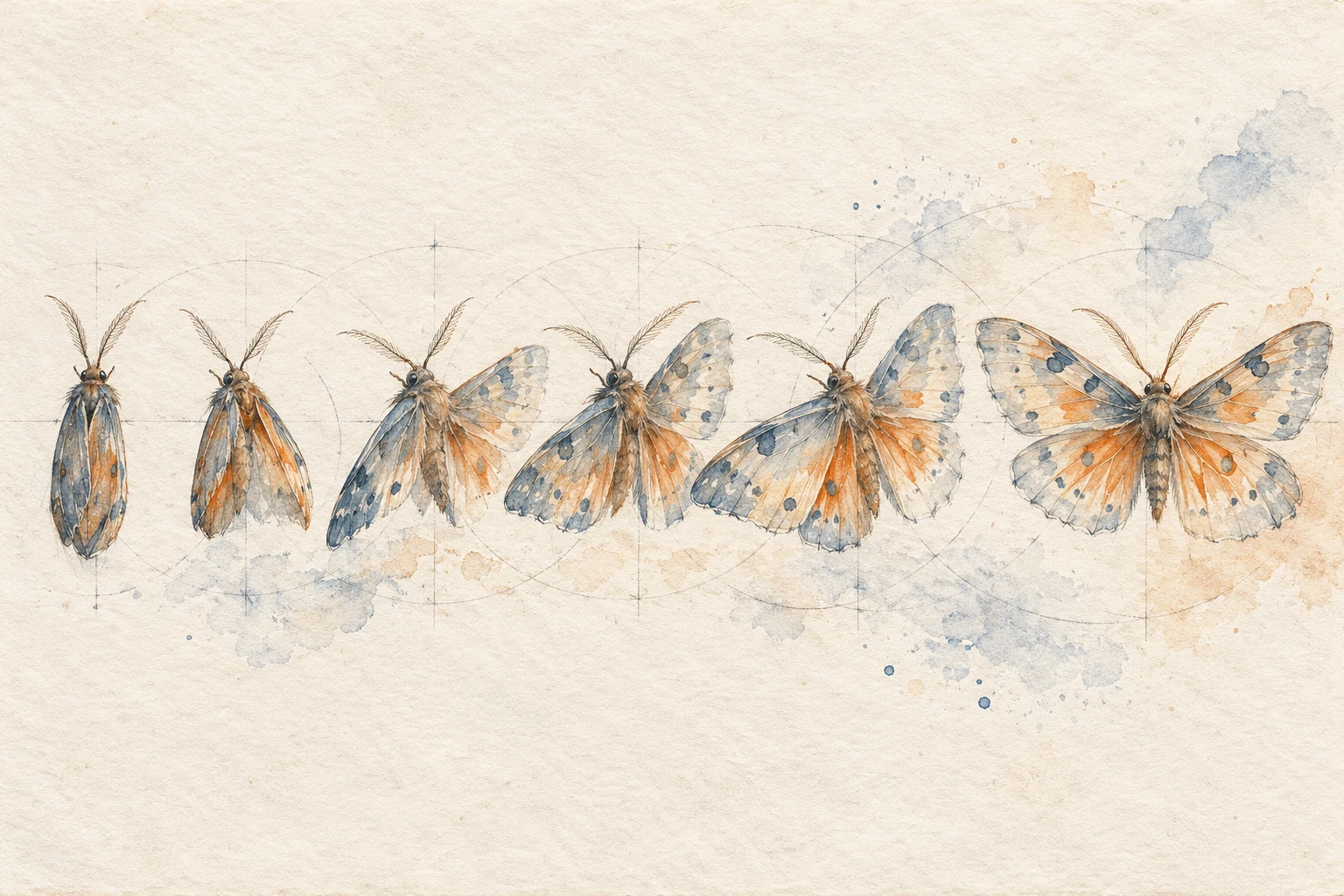
Follow-through and overlapping action with a paper flag
Give connected parts different stopping times so an action carries through a flexible object, using a flag study that separates the leading movement from its trailing response.

Connected parts arrive at different moments
Connected parts do not always arrive together. A hand stops while a loose sleeve keeps moving; a pole turns while its flag follows. Overlapping action gives an animated object internal relationships. The viewer can infer stiffness, looseness, and weight from those delays.
Delay connected flag sections progressively
Animate a short pole rotating into place. Attach a flag made of three simple sections. Delay each section slightly behind the previous one, then reduce the size of its later swings. Begin with visible joints so you can inspect which part leads each change.
Make delay between connected sections explicit in the working notes before building the full piece. Keep the ordinary state beside the most extreme intended state. The useful boundary is where the relationship remains understandable, rather than where the tool stops allowing a larger value. Check both ends before filling the middle. A useful acceptance check is whether the trailing response remains connected to the leading movement. Judge that at the intended viewing size or working distance, where tiny construction mistakes and exaggerated effects can have very different consequences.
Check attachment points and residual swings
If the flag looks disconnected, check the attachment points before adding more waves. If the motion seems endless, reduce the residual swings. A trailing part should respond to the action's energy rather than continuing an unrelated decorative oscillation.
When the result becomes confusing, return delay between connected sections to its recorded starting point. Review the movement as a strip of still moments as well as in playback. Inspect the pose immediately before and after a confusing event.
Compare a stiff banner with a soft ribbon
Create a stiff banner and a soft ribbon from the same leading movement. Change the amount of delay and bend between sections. Keep the pole's motion untouched so the material difference belongs to the follower.
Make three comparison versions using none, a short offset, and a visibly long offset. Choose one visible feature to compare before starting. Inspect it across the entire set rather than letting the most dramatic result dictate the criterion afterward. Keep both a preferred version and a useful failed version, with a short note describing the difference between their behavior.
Preserve the attachment before adding delay
For the pennant, keep the first section attached to the pole in every frame. Calculate later sections from their preceding attachment points rather than delaying the entire flag's position as one object. Otherwise the cloth can drift away from the stick. Mark the joints during construction and inspect their spacing at the largest bend. A convincing delay changes the relative orientation of connected parts while preserving their physical relationship.
A pennant following its pole
Animate a pennant on a short stick that turns right and stops. The attached edge arrives first, the center follows, and the tip makes one smaller final swing. The sequence should reveal a chain of influence traveling through the flag.
References & further reading
Examples and exercises in this guide are original teaching scenarios.