Use affinity mapping without losing the evidence
Organize research observations into meaningful groups while preserving context, source references, counterexamples, and the distinction between observation and interpretation in a studio-service analysis exercise.
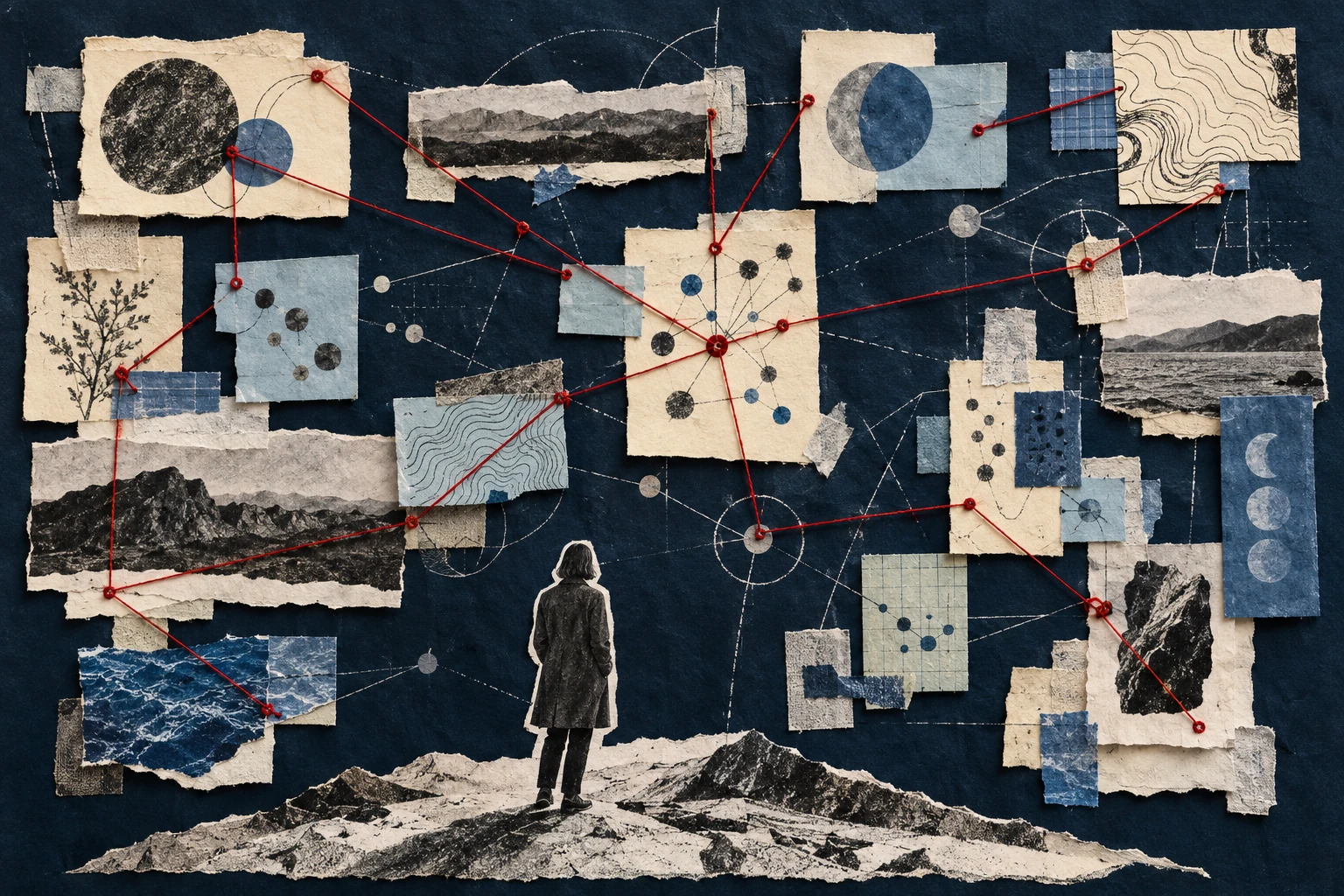
Keep observations traceable
Affinity mapping groups related observations to help a team see patterns in research material. The method becomes unreliable when notes lose their context or interpretations are presented as things participants actually did. Start with traceable observations and keep the original session material available through the team's approved evidence-handling process.
Group relationships without erasing exceptions
Write one meaningful observation per note and distinguish direct evidence from a hypothesis or proposed solution. Group notes by the relationship you see, then name that relationship in ordinary language. Keep unusual observations visible rather than discarding them because they do not fit a large cluster. Group size alone does not establish importance or prevalence. Keep the method subordinate to the question. A familiar workshop format or favorite tool can help with mechanics while still being poorly suited to the uncertainty at hand. Explain why the chosen activity can reveal something useful, and state what it cannot establish. This makes the plan easier to challenge constructively and helps the team choose another approach when the conditions or available evidence change.
Practice with clearly fictional preparation notes
Practice with clearly fictional notes about workshop preparation: uncertainty about materials, difficulty finding arrival instructions, and confusion about eligibility. Group them, name the groups, and write a possible finding for each. Mark the exercise as invented practice material. Explain what actual evidence would be needed before using a finding to justify product work. Run a short rehearsal before treating the artifact as ready for its intended use. Ask a colleague to follow it with the stated context and note where they need extra explanation. Record those gaps as preparation issues rather than findings about the product or its audience. Revise the artifact, then check that the next person can understand the task, available information, and expected output without having to reconstruct the session that created it.
Challenge vague clusters and dominant anecdotes
If a cluster is named poor UX, it is too vague to guide a decision. If one dramatic quote dominates the discussion, return to the supporting observations and their context. If notes from different tasks look similar, inspect whether they share a cause or merely share a word. Avoid forcing a tidy story onto mixed evidence. If discussion becomes repetitive, locate the decision that remains open and the information needed to resolve it. More notes or another round of voting may not supply that information. Pause the activity when necessary and assign a focused investigation or an operational question. Keep the unresolved issue visible in the handoff so another team does not mistake the absence of a decision for permission to improvise.
Trace findings back to their evidence
Review every proposed finding by tracing it back to observations and checking for contradictions or gaps. Separate the finding from any action the team proposes in response. Record uncertainty and questions for further investigation. The map is a working tool for analysis, not a decorative proof that the team's preferred interpretation has become objectively true.
Worked decision
A fictional materials-uncertainty cluster can practice grouping mechanics. It cannot justify a claim that real attendees commonly face that problem.
References & further reading
Examples and exercises in this guide are original teaching scenarios.