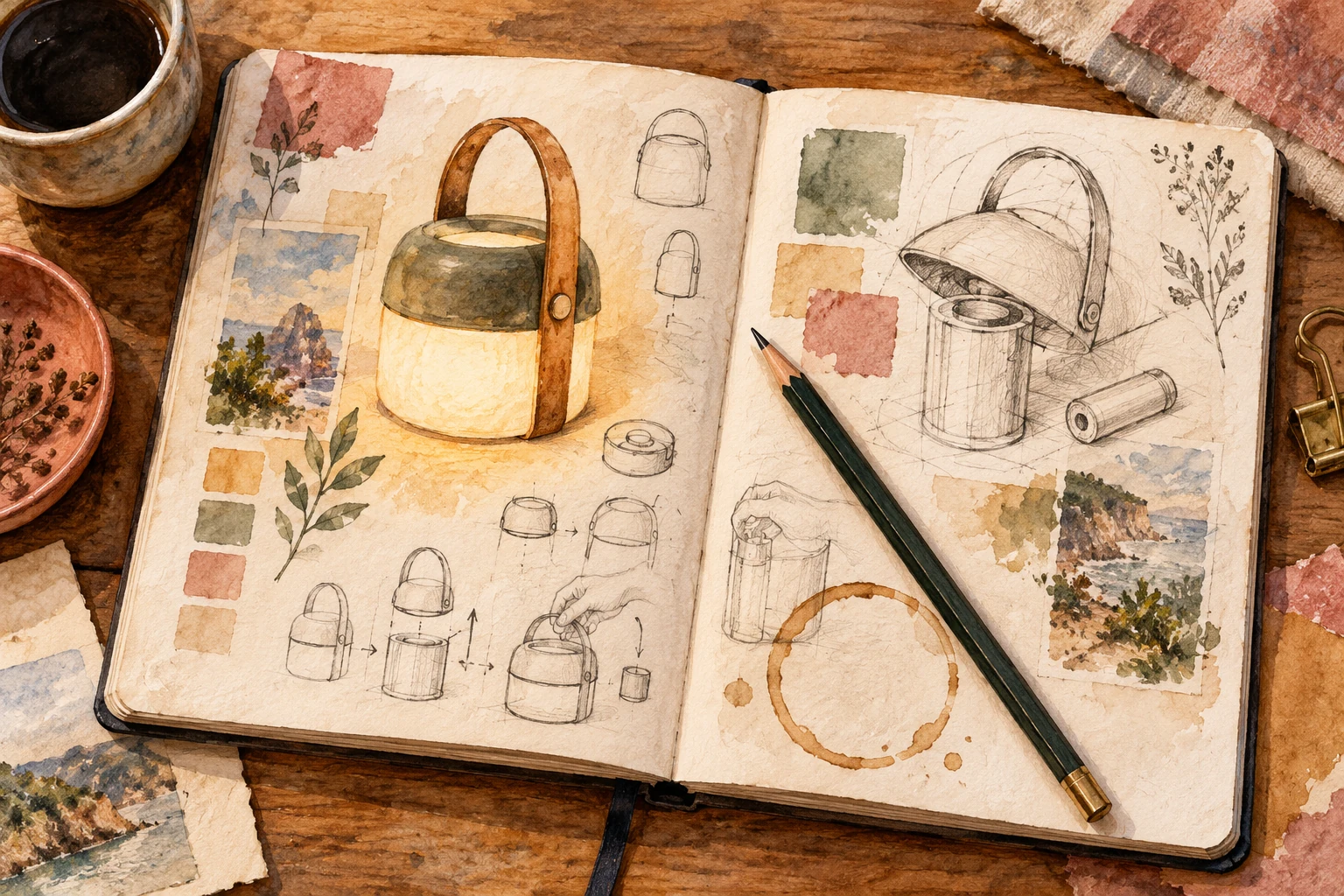
Exhibition design for many voices: build a path without one story
The Design Museum’s The Nue Black Aesthetic opened on 6 November 2026. Use its multi-section approach as a prompt to design an exhibition path that makes room for distinct practices without treating a group as a single story.
Begin with the opening question
On 6 November 2026, the Design Museum opened The Nue Black Aesthetic, a guest-curated exhibition about contemporary Black design. The museum describes more than 100 objects across six sections and names 16 featured designers. Its central question asks what it means to be a Black designer working today; the exhibition materials also stress that there is no single answer. This is a useful design problem: how can a visitor see a shared frame and still encounter particular makers, materials, and decisions?
The exhibition offers an example of an organizing structure, not a recipe to copy. Its announced sections include historical context, identity as inspiration, community building, and rethinking systems. A film with designers’ reflections and an installation commission form additional parts of the visitor’s encounter. Those components do different work: context establishes a conversation, objects show varied practices, and the film can make process and motivation audible. Do not infer that one section speaks for everyone. The names, objects, and distinct claims matter as much as the umbrella.
Use a frame without turning it into a box
A broad theme helps a visitor understand why works share a room. It can also tempt a designer to sort every object into a single identity label. Avoid that shortcut by separating the exhibition’s frame from each maker’s point of view. The frame explains the question being explored; an object label should explain why this particular work is here, what choices shaped it, and what is specific to its maker or context.
Try three layers of information. First, orient visitors to the question and sections. At each transition, introduce the idea without claiming it describes everyone in the room. At object level, explain why this work is here: its material, use, collaboration, or design decision. Moving between the shared question and the particular object helps visitors connect works without reducing them to examples of one point.
Make the sequence legible and revisable
An exhibition route is an editorial sequence. A visitor needs enough context to enter halfway through, but the order can still create useful development: establish a history, show different present-day practices, then invite a question about what design culture might make possible. This is one possible structure, not a universal progression. A circular route, a set of parallel paths, or a thematic map may suit other material better.
Sketch the route before designing room graphics. Mark entrances, section boundaries, pauses, and shifts in idea. For each transition, write the sentence a visitor should carry forward. If it relies on a stereotype or implies that one maker represents a whole community, revise it. Add orientation at each section so visitors who arrive elsewhere can still follow the work.
Plan access as another way into the story
Interpretation is part of the experience, so plan its formats with the objects and route. The Design Museum’s current access information lists a large-text guide for this exhibition and a British Sign Language tour scheduled for 28 November 2026. They provide different ways to encounter information; neither should be described as a replacement for the other or assumed to serve every visitor.
For a new project, check whether key context is available beyond small wall text. Can someone preview the route, sit while reading, or use a concise guide without losing the relationships among works? Are media elements captioned and understandable without sound? Treat these as questions to review with visitors and access specialists, not as a guarantee from a checklist. Visitors should be able to choose a mode and still encounter the main ideas.
Review what the visitor might conclude
Before finalizing an exhibition, review the whole route for unintentional messages. Which maker is introduced first? Whose work gets the longest explanation? Are multiple forms of practice visible, or does one section carry the burden of explaining a whole identity? Does a label describe a maker’s own stated intention, or has the institution supplied a meaning that the work cannot support? These questions do not produce a single correct arrangement. They make editorial choices visible and easier to discuss with the people whose work is presented.
Try it yourself
- Write one open question for a small exhibition and list four to six works that could enter it. Use fictional or permissioned material; do not assign intentions to real makers.
- Draw an opening, two alternative section paths, and a closing point. Add orientation at each possible entry.
- Draft a section introduction and two object labels. Name a specific material, decision, source, or use in each label.
- Create a large-text or audio-friendly version of the route. Check whether its key relationships remain clear.
- Ask a peer to describe the exhibition’s claim after tracing the route. Revise transitions that make a broad claim sound universal.
Worked example: a fictional neighborhood object display
Imagine a teaching display called “Things We Share,” built from four invented objects: a folding stool, market sign, repaired lamp, and reusable food container. The opening asks how ordinary objects support gathering. One route follows materials; another follows repair. Each label names its fictional maker, describes a construction choice, and connects that choice to a route. The closing invites comparison: what do the objects share, and where do their uses differ? A one-page large-text guide repeats the map and label relationships. This planning exercise reports no real exhibition, maker, visitor result, or consultation.
References & further reading
- Design Museum: The Nue Black Aesthetic (opened 6 November 2026) ↗
- Design Museum: The Nue Black Aesthetic press release (30 July 2026) ↗
- Design Museum: Access information ↗
Examples and exercises in this guide are original teaching scenarios.